How to Split Groceries With Roommates
How to split groceries with roommates without the drama: shared kitty, staples only, rotating shops or separate food. Plus even vs usage splits and tracking it all.

Arun Andiselvam

Groceries are the sneakiest expense in any shared home. Rent is fixed. The electricity bill arrives with a number printed on it. Groceries are a hundred small decisions a month, and somehow they're the thing roommates argue about most.
What makes it worse is that nobody wants to bring it up first. You notice your milk disappearing. Someone else notices they've bought dish soap three months running. Nobody says anything until it comes out sideways during an argument about something else entirely.
So let's fix it properly. Here's how to split groceries with roommates in a way that feels fair to everyone, takes almost no effort to maintain, and doesn't turn your kitchen into a negotiation table.
Why Grocery Splits Cause More Drama Than Rent
Here's something worth sitting with. Roommates often start disagreeing about grocery costs before they've even moved in together. The conversation about who buys what, and how it gets paid back, tends to get skipped during the excited flat-hunting phase, then it surfaces two weeks in, when someone's already resentful.
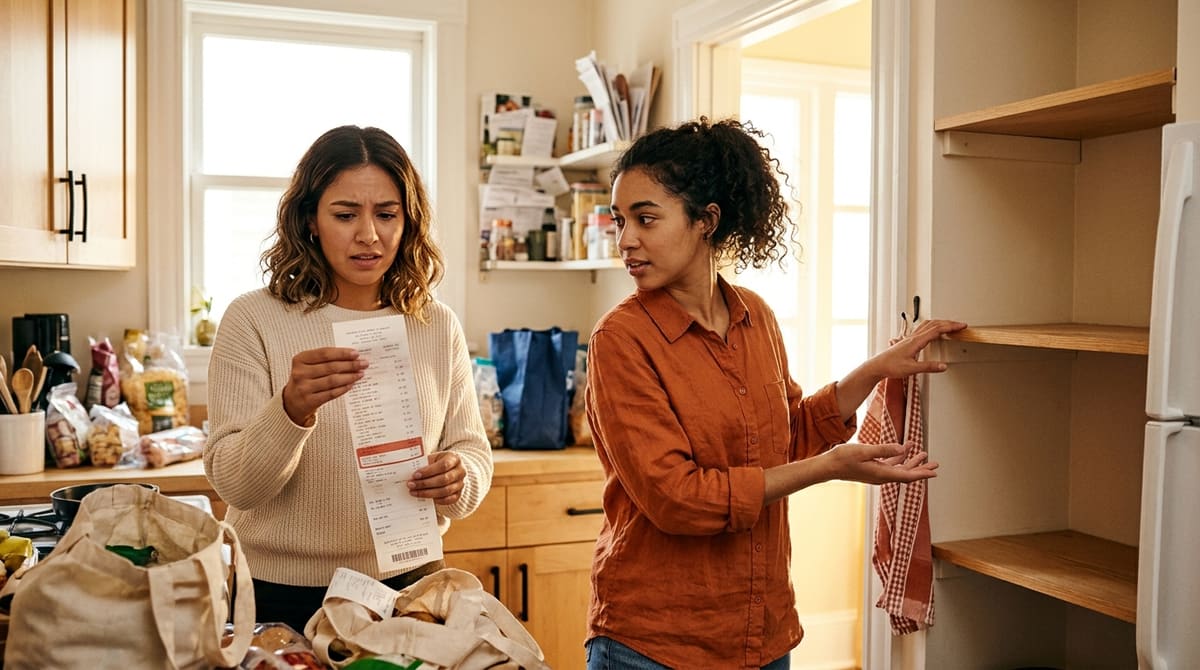
Rent is uncomplicated because it's a single number with a single due date. Groceries are different for three reasons.
Appetites and diets vary wildly. One roommate eats two meals a day at the office. Another cooks every night. One is vegetarian, one buys chicken twice a week, and one lives on protein powder and oats. An even split quietly transfers money from the light eater to the heavy one, month after month.
The shopping is uneven. Whoever happens to be free on Sunday does the big run. That person fronts a large amount and then has to chase everyone else for their share. It feels awkward even when the sum is small and everyone intends to pay.
Nothing is written down. Someone grabs bread on the way home. Someone else pays for the water can. These small amounts never make it into any record, so when settlement time comes, everyone's memory tells a slightly flattering version of events.
This is the same pattern that shows up when a group splits a restaurant bill evenly. One person realizes they've just subsidized somebody's expensive order. Done once, it's nothing, but done fifty times a year in your own kitchen, it curdles into real frustration. Financial disagreements between roommates are far more common than people expect, and they create drama that's almost entirely preventable with a system agreed on early.
Four Ways to Split Groceries (and Who Each One Suits)
There's no single correct method. There's only the method your particular household will actually stick to. Here are the four that work.
1. The Shared Kitty
Everyone contributes the same agreed amount at the start of the month into a common pot. All shared groceries come out of it. If it runs dry, everyone tops up equally. If there's money left, it rolls over.
Best for: Households where everyone cooks and eats at home in roughly equal measure, and where there's one or two people happy to do most of the shopping.
The catch: It only feels fair if consumption is genuinely similar. If one person is rarely ever home, they'll start resenting the contribution.
2. Shared Staples Only
Split only the things everybody uses, like rice and cleaning supplies. Everything personal (your cheese, their protein bars, somebody's cold brew habit) is bought and paid for individually and labeled.
Best for: Houses with different diets, different schedules, or anyone with strong food preferences.
The catch: It needs a clearly agreed list of what counts as "shared." Write it down once, since arguments about whether eggs are a staple are not worth having twice.
3. Rotate the Shop, Split the Total
Each roommate takes a turn doing the full grocery run, and the total gets logged and split evenly, with everyone settling up at the end of the month. This spreads both the cost and the labor, because the time spent shopping is a real contribution too, and it's the one that never gets counted.
Best for: Three or four roommates with similar eating habits and similar schedules.
The catch: It falls apart if someone skips their turn. The logging has to be non-negotiable.
4. Everyone Buys Their Own
No shared groceries at all. Separate shelves, distinct everything.
Best for: Roommates who barely overlap, or who have had grocery conflicts in a previous house and want zero ambiguity.
The catch: It's wasteful. You'll have three bottles of ketchup and four half-used bags of flour. Most households land on a hybrid, this method for food, shared staples for everything else.
How to Share Groceries with Roommates Without Keeping Score in Your Head
The method matters less than the record. This is the part almost everyone gets wrong. They agree on a system in month one, keep it in their heads, and abandon it by month three.

Figuring out how to share groceries with roommates comes down to three small habits.
Log it the moment you pay. Not that evening, not at the weekend. Standing at the counter, before the receipt goes in your pocket, because anything logged later gets logged wrong or not at all.
Separate shared from personal at the till. Two baskets, two payments, or just a quick note on which items were for the house. This takes seconds and removes the single biggest source of disputes.
Settle on a fixed date. Pick a day, say the first weekend of the month, and settle everything then. Having a deadline means nobody has to ask, which is the whole point. The asking is what damages relationships, not the money.
A useful trick borrowed from how households handle utilities is giving each roommate ownership of one recurring thing. One person handles the monthly vegetable order, another the gas cylinder, another the cleaning supplies. Each owner shares the amount with the group and sets a payment deadline a few days before the money is actually needed, which distributes the mental load instead of dumping it on whoever is most organized.
Should Groceries Be Split Evenly or by Usage?
This is the question that generates the most heat, so let's be direct about it.
Split evenly when everyone eats at home at similar rates and nobody has unusual dietary requirements. Even splits are simpler and faster, and the small unfairnesses cancel out over a year.
Split by usage when one person is clearly consuming much more or much less. Think of the roommate who travels for work three weeks a month, or the one person who's vegetarian in a household that buys a lot of meat. Split shared staples evenly here, and keep everything else personal.
It's the same logic that applies to the rest of the house. Utilities are generally fairest split per person, because three people use roughly three people's worth of water and electricity regardless of which room they sleep in. Rent, on the other hand, usually works better per room, unless the bedrooms differ a lot in size, in which case some households have each roommate privately write down what they'd be willing to pay for each room and use that to set the split. It's a surprisingly effective way to settle something that otherwise relies on everyone's opinion of their own fairness.
Common areas are where this gets contested. If one bedroom holds a couple and the others hold one person each, that couple is using more kitchen, more bathroom, more of everything shared. For groceries specifically, the answer is clean: count people, not rooms. Two people in one bedroom eat two people's worth of food.
What People Searching "How to Split Groceries with Roommates Reddit" Are Really Asking
If you've typed "how to split groceries with roommates reddit" into a search bar, you're probably not looking for a method. You already know the methods. You're looking for reassurance that your situation isn't unreasonable, that it's okay to feel annoyed about the roommate who eats your leftovers, or to want out of a kitty you're subsidizing.
It is okay. The honest answer buried in all those threads is the same one every time. The households that don't fight about groceries aren't more generous or more patient. They just wrote the rules down before they needed them.
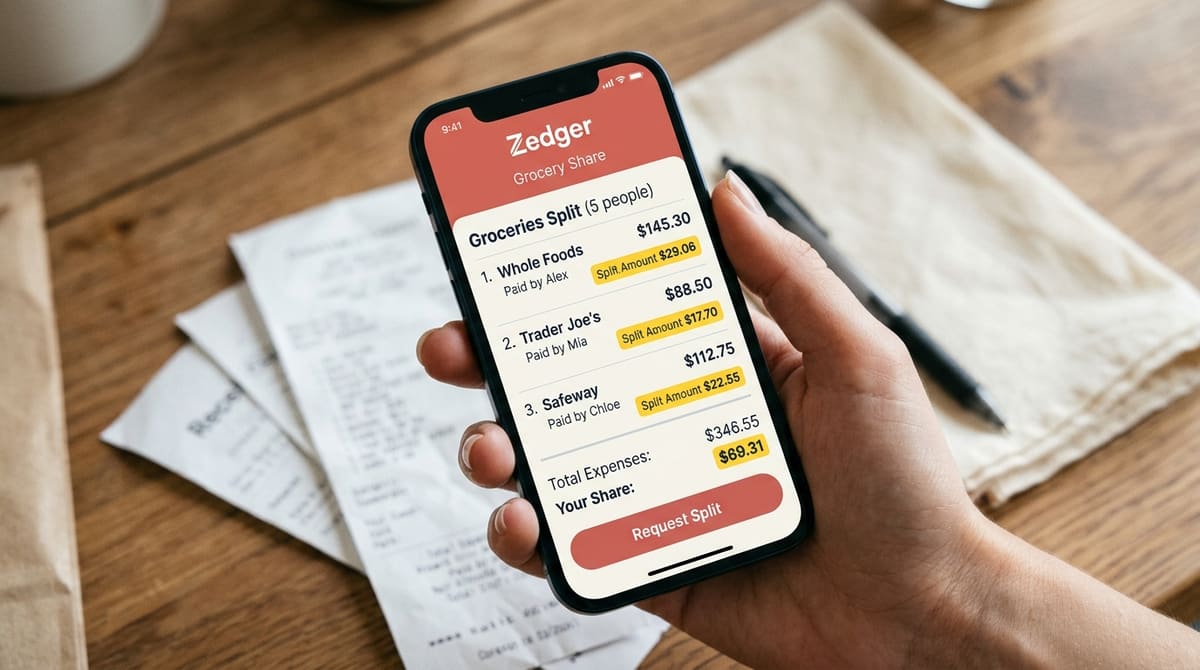
The second honest answer is that tracking tools end the arguments almost entirely. Not because the math is hard, but because a shared record removes the need for anyone to remember, accuse, or defend. When the numbers are visible to everybody, the conversation stops being about trust.
That's the core of it. Bill splitting strains relationships even when the division itself is perfectly straightforward, because the friction isn't arithmetic. It's the repeated small act of asking someone for money.
Using an App to Keep Grocery Splits Painless
A spreadsheet works, briefly. Then someone stops updating it.
This is where a dedicated app earns its place. It's why we built Zedger around separate Books rather than one long mixed list. Your grocery runs, rent, and utilities don't belong in the same column as a weekend trip. In Zedger, your household gets its own Book, regular items like rent and the monthly gas bill live in a Recurring Book so nobody re-enters them, and trips stay in a Trip Book where they belong. Smart Settlements then works out the shortest set of payments to clear everything, so three roommates don't end up making six separate transfers.
A few things we were deliberate about, because they're what beginners worry about most. Zedger never asks for bank credentials or OTPs. There's nothing to link. It works offline, so you can log a purchase in a basement supermarket with no signal and let it sync later. The free plan is genuinely usable too: four Books, ten members per Book, and six months of history. If you want more, Pro is $1/month or $8.99/year, and VIP is $1.99/month or $17.99/year. You can start on free and stay there.
More than 10,000 families already use Zedger to keep shared spending straight, and the roommate use case works the same way. Our guide to bill splitting for roommates covers the whole setup if you want the full picture on rent, utilities, and routine bills. If you'd rather weigh the options first, we've compared the best roommate expense tracker apps honestly.
Agree on your grocery rule this week, before anyone's annoyed. Then let something else do the remembering.
GET IT ON Google Play · Download on the App Store · Managing a housing society or a larger group? Contact Sales.
Tags: