How to Split Trip Expenses Fairly Between Couples
How to split trip expenses fairly between couples: 50/50, proportional to income, alternating days or a shared pot, plus lodging, budgets and settling up.

Arun Andiselvam

Planning a trip with your partner is supposed to be the fun part.
Learning how to split trip expenses fairly between couples is about agreeing on a system before you leave, so nobody spends the trip doing arithmetic in their head. Below, we'll walk through the methods that work, and we'll cover the awkward situations too, like different incomes, different taste in hotels, and a split that feels wrong halfway through. Then we'll show you how to settle up afterward without a single tense conversation.
The short answer: pick a method before you book anything
Here's the whole guide in one paragraph, in case you're reading this on the way to the airport. Agree on a split method before the first booking is confirmed. Your choice might be equal, proportional to income, or category-based. Decide who fronts what. Log every shared expense in one shared place both of you can see. Settle up once, at the end, in a single transfer.
That's it. The reason most couples end up arguing isn't that one method is fair and another isn't. It's that they never picked one. They just started spending and assumed it would even out. It rarely does.
A fair way to split vacation expenses starts with being explicit. Not formal, not awkward, just explicit. "Let's do a straight 50/50 on everything shared, and we each cover our own souvenirs." That sentence, said out loud before you book, prevents more friction than any app ever will.
One rule is worth adopting permanently: cost-splitting disputes get discussed and agreed on before the booking is confirmed, never after the trip ends.
Why splitting travel costs as a couple gets tense in the first place
It's worth understanding the emotional mechanics here, since the numbers are almost never the real problem.
Resentment on a shared trip builds when one person feels like someone else is getting more out of the arrangement than they are. Not more money, more benefit. Nobody says anything, because saying something feels petty. So it sits there.
The tricky part is that this friction compounds. A small imbalance on day one is a mild irritation. That's why splitting travel costs as a couple works best when the system is dull and visible. When both of you can look at the same list and see the same numbers, there's nothing to interpret and nothing to resent.
The second thing worth naming is that avoidance feels like generosity but isn't. "Don't worry about it" is lovely once, and undefined debt is the most uncomfortable kind. Both of you would rather have a number.
The goal of every method below isn't maximum precision. It's removing ambiguity, fast and early, in a way neither of you has to think about again.
Trip expense splitting methods that actually work
There are only a handful of real approaches, and most couples end up using some blend of them.

Straight 50/50 on shared costs
Each of you pays half of anything you both use. That means lodging, transport, and shared meals or tickets. Personal spending stays personal. This is the default for a reason: it's simple, it's simple to explain, and when incomes are broadly similar it genuinely is fair.
Spend five minutes agreeing what counts and you've solved most of it.
Alternate who pays, day by day
This is one of the most underrated trip expense splitting methods: you take today, your partner takes tomorrow. Whoever's "on" pays for everything that day, from breakfast to the taxi to dinner. At the end of the day or the end of the trip, you total each person's days and settle the difference.
This works beautifully because it kills the constant micro-negotiation at every till. Nobody's reaching for a card or working out who got the last one.
Divide by category
Instead of tracking line items, each person takes ownership of whole categories. One of you handles lodging and transport, the other handles food and activities. You each pay your categories in full, then compare totals at the end and settle the difference from your card statements.

This is excellent for couples who hate logging things, since the admin drops to almost nothing during the trip. The one thing to watch is picking categories that are roughly comparable in size, or at least going in knowing one of you is fronting more and will be reimbursed.
The shared pot
One person collects an agreed amount from both of you upfront, puts it on a single card or account, and that card pays for everything shared. No individual transactions to track at all. At the end, you compare what was actually spent against what went in, and either top up or refund the difference.
This is the cleanest approach for longer trips, and it's also the easiest to extend to a bigger group later. It does require trust in whoever holds the pot, and it requires both of you to agree on what the pot covers before the first swipe.
Hybrid splitting
In practice, how to divide vacation costs usually comes down to a mix. Split lodging one way, shared daily spending another. Lodging often works best divided by room or by who wanted the upgrade, while day-to-day spending runs more smoothly on an equal or alternating basis. Mixing methods like this lets each part of the trip use whichever approach fits it, rather than forcing one rule to cover everything.
How to split trip expenses fairly between couples when incomes are different
This is the question that stalls more trip plans than any other. When one partner earns significantly more, does an equal split stay fair?

Equal splitting divides the dollars evenly. Proportional splitting divides the strain evenly. If one of you earns twice what the other does, a 50/50 split on an expensive hotel costs one partner a small slice of their month and the other a painful one. Same number, very different experience.
Here's a formula you can run in two minutes on your phone.
Step one. Write down each person's monthly take-home income. Call them A and B.
Step two. Add them together for the household total.
Step three. Divide A by the total, and divide B by the total, to get each person's share.
Step four. Apply those shares to every shared trip cost. On a 1,200 lodging bill, A pays about 804 and B pays about 396.
That's the whole calculator.
What matters is that the person earning less gets a real say, not a ratio handed to them. Proportional splitting done well feels like partnership. Done badly, announced rather than discussed, it can feel like being reminded of your place. Have the conversation, agree the percentages together, write them down, and then never relitigate them mid-trip.
One more note: proportional doesn't have to mean permanent.
The fair way to split vacation expenses on lodging
Lodging is usually the biggest single line on any trip. It's also where "equal" stops being obvious, especially if you're traveling alongside friends or family rather than just the two of you.
Travelers genuinely struggle with how to divide a rental when the rooms aren't equal.
The approach that works best is hybrid. Divide lodging by room, and split everything else per person.
For a couple booking alone, this translates to something simpler. Decide whether the room you're booking is the room you both wanted. If one of you pushed for the upgrade, consider having that person cover the difference between the standard option and the nicer one, with the base cost split normally. That single adjustment resolves an enormous amount of quiet friction.
The timing rule applies hardest here. Rental cost splits should be discussed and agreed on before you confirm the booking. Once the non-refundable payment has gone through, you've lost your options, and all that's left is an argument about who assumed what.
Pre-trip budgeting: couples travel budget tips that prevent arguments
The best money conversation of your trip happens before the trip, and it takes about half an hour.

Sit down together and build a rough estimate across the obvious buckets. Flights or fuel, lodging, local transport, food, activities, and a buffer for the things you can't predict all belong on the list. You don't need precision. You need a number you both recognize, so that when the real spending starts, nobody's surprised.
Here's where most pre-trip budgeting goes wrong. Couples estimate the big items carefully and ignore the small ones. The flights and hotel get researched to the dollar, while the daily spending gets a shrug. But daily spending is where the gap between your two expectations actually lives. One of you is picturing market food and a free walking tour. The other is picturing a nice lunch somewhere with a view. Both of those are reasonable, and they're also not the same budget.
So the most useful of all couples travel budget tips is to estimate a daily shared spend, not just a total. Say the number out loud. If one of you flinches, you've just discovered the conversation you needed to have, and you're having it at your kitchen table instead of outside a restaurant in another country.
Two more things are worth settling in that same half hour:
- What's shared and what's personal. Souvenirs, clothes, spa treatments, and that bag you'll definitely use at home stay personal, unless you agree otherwise.
- Your exit clause. If spending runs well past the estimate, what do you do? Scale back the last few days, or accept it and move on? Deciding in advance keeps it from becoming a blame conversation.
Write the answers somewhere you'll both see them. A note on your phone works, though a shared Trip Book works better, because the budget and the actual spending end up in the same place.
Negotiating when one of you wants luxury and the other wants budget
This is a values difference dressed up as a money difference. Treating it as pure math will not solve it.
Someone who prefers budget travel usually isn't just saving money. They often genuinely like the simpler version.
The practical fix is to stop splitting preferences and start splitting costs by who holds the preference.
Set a baseline together, the version of the trip you'd both be genuinely happy with, and split that baseline by whatever method you agreed. Then, anything above the baseline is paid for by whoever wants it. Upgrade to the sea-view room? The person who wanted it pays the gap. Want the tasting menu rather than the neighborhood place? Same rule.
This does two things. It removes the pressure to talk the other person into spending money they don't want to spend. It also removes the guilt of being the one who wants nicer things. Both of you get to want what you want without it becoming a negotiation every single day.
You can run it in the other direction too. Managing money while traveling together works much better when "no thanks" is a normal, low-cost answer rather than a confrontation.
How splitting norms differ around the world
If you're traveling internationally, or with people from somewhere other than where you grew up, it's worth knowing that splitting isn't universal.
In much of the US and Northern Europe, splitting the bill is the default and asking for separate checks is unremarkable. Restaurants expect it, friends expect it, and nobody reads anything into it.
Across large parts of Asia and the Middle East, that's often not how it works. One person paying for the whole table is common and carries real social meaning, tied to hospitality, seniority, or celebrating something.
There's also a practical layer. In some places, restaurants simply won't split a bill across multiple cards.
None of this changes your system. It just keeps your split a private matter between the two of you, settled away from the table rather than at it.
Handling retroactive splits when something feels unfair mid-trip
Sometimes you get three days in and realize the arrangement isn't working. One of you has paid for noticeably more. The "shared" category turned out to be mostly one person's preference, and the 50/50 you agreed on is quietly squeezing someone.
You can fix this mid-trip. Think of it less as admitting the plan failed and more as making a small correction while there's still time.
Say it early and say it small. The longer you sit on it, the heavier it gets. "Hey, I've been covering most of the food and I think we're off balance, can we look at it tonight?" is a ten-second sentence that defuses a week of silent resentment.
Fix forward, not backward, where you can. Rewriting the first three days from memory is unpleasant and inexact. It's usually easier to leave what's spent and rebalance going forward. The other person covers the next few days, and you end roughly even. If you've been logging things properly, you can recalculate exactly. If you haven't, approximate and move on.
Change the method, not just the numbers. If the problem is that the split itself is wrong, adjusting one payment won't help. Switch approaches. Go from 50/50 to alternating days, or from loose tracking to a shared pot. Address the mechanism.
Agree on how it ends. Before you go back to enjoying the trip, say what the new arrangement is and when you'll settle. Ambiguity is what caused this in the first place.
One thing to resist is retroactively renegotiating a decision that's already been paid for and consumed. If you agreed to split the nice hotel and you stayed in the nice hotel, that one's done. Mid-trip corrections should be about fixing a pattern, not about relitigating a specific choice you both made.
Tools that make splitting expenses on a trip almost automatic
You can run any of this with a notes app and goodwill. But the tracking is where good intentions quietly fail, especially across currencies, across days, and across the stretch where you have no signal.
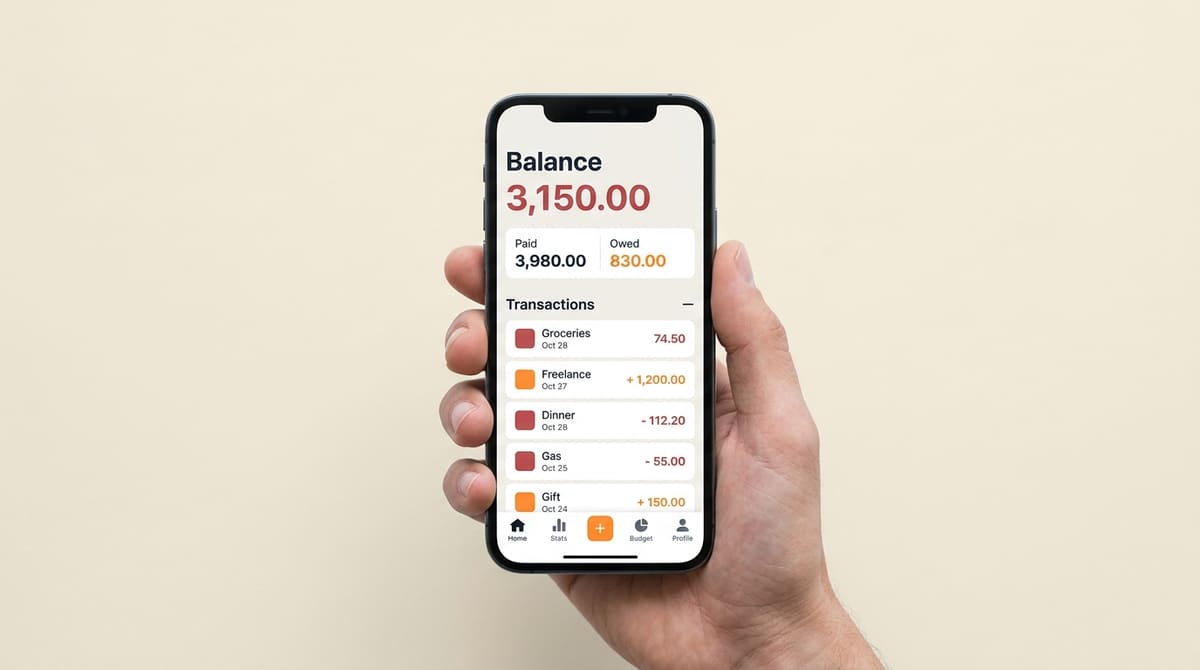
A few things genuinely matter when you're choosing software for this.
It has to work offline.
It should keep your trips separate from everything else, since shared finances aren't one list.
It should handle more than equal splits. You need percentage splits for proportional arrangements and unequal splits for the room-size situation. You also need the ability to exclude someone from an expense they didn't take part in. Without those, you're back to doing math manually.
It shouldn't ask for your bank. This one matters more than people expect. Zedger never asks for bank credentials, UPI access, or OTPs. It's a ledger, not a payment processor. You record what was spent and settle through whatever method you already use. Sensitive data can also be stored locally on your device rather than on a server, if that's your preference.
Settling should be one tap, not a spreadsheet. Smart Settlements works out the simplest set of transfers to clear everything, so you end the trip with one payment instead of six.
If you're weighing options, we've written a longer comparison of the best app for splitting trip expenses that covers what to look for in more depth. And if you already know you want a dedicated travel setup, the travel expense splitter is built specifically for trips with shared costs across people and currencies. For everyday shared money as a couple, see our guide to the bill splitting app for couples.
For most couples, the free tier is enough. Four Books, ten members, and six months of history covers a couple of trips and a household ledger comfortably.
Post-trip reconciliation without the awkward conversation
You're home, and somebody owes somebody something. This is where trips go wrong after the fact.
Do the reconciliation within the first few days. Memory fades fast, card statements lag, and the longer you wait, the more it feels like dredging something up rather than finishing something off. Sit down together, actually together, not over text, and go through the record once.
If you've been logging as you went, this takes ten minutes. Pull up the totals, check that each person's contributions are recorded, let the settlement calculation tell you the single number that clears it, and transfer it. Done.
If you haven't been logging, rebuild from card statements and photos of receipts. Be generous with ambiguity rather than precise with it. The goal is a number you both accept, not forensic accounting. Arguing over a small uncertain amount costs more in goodwill than it's worth in cash.
When you genuinely disagree, a few things help. If something is truly unresolvable, split the disputed amount down the middle and let it go.
Then do the part most couples skip. Spend two minutes saying what you'd change. Maybe alternating days worked and the category split didn't, or maybe the daily food estimate was way off. Write it down somewhere you'll find it before the next trip. That note is worth more than any single settlement.
Putting it together: your pre-trip money checklist
Here's the whole thing, in order, as something you can work through together before you leave.
- Agree the method. Equal, proportional, alternating days, category-based, or shared pot. Pick one. Say it out loud.
- Define what's shared. Lodging, transport, groceries, and joint meals or activities count as shared. Personal shopping, individual treats, and solo excursions don't, unless agreed.
- Set the baseline and the upgrade rule. Whoever wants above-baseline pays the gap.
- Estimate a daily shared spend. Not just a trip total. The daily number is where expectations actually differ.
- Decide who fronts the big bookings and whether they're reimbursed now or at the end.
- Settle lodging before booking. Especially if rooms or beds aren't equal, or you're traveling with others.
- Set up one shared record. A Trip Book, visible to both of you, where every shared expense gets logged as it happens.
- Agree on a mid-trip check-in. A quick, no-blame look at the running total partway through, so nothing builds up.
- Reconcile within a few days of getting home, in one sitting, with one transfer.
That's how to split trip expenses fairly between couples without it ever becoming a topic. The system does the remembering, so neither of you has to keep score. Managing money while traveling together stops being a source of tension and becomes just another thing you've already handled.
Ready to set up your first Trip Book? Get it on Google Play or download on the App Store, it's free to start, and you can test the whole thing on your next weekend away. Organizing something bigger than a couple's trip, like a club or a housing society collection? Contact Sales and we'll help you set it up.
Tags: