Splitting Travel Expenses With Multiple Currency Conversions
How to split travel expenses across multiple currencies: pick a base currency, log in the currency you paid, convert at the transaction-date rate, and settle once.

Arun Andiselvam

You land in Lisbon, pay for the apartment in euros, then hop a budget flight to Marrakech and buy dinner in dirhams. Someone else covered the rental car in pounds because their card had no foreign transaction fee. Three weeks later, nobody can agree on who owes what. The group chat has gone quiet in that specific way that means everyone is slightly annoyed.
Splitting travel expenses with multiple currency conversions is not actually hard math. It's a bookkeeping problem disguised as a math problem. The fix is to pick one home currency before you leave. Log every expense in the currency you actually paid in, let a tool convert at the rate from that day, and settle once at the end. The rest of this guide covers the decisions around it: how to split when incomes differ, how to avoid being the person who always pays, whether to budget beforehand or just track as you go, and how to handle the inevitable receipt someone remembers four days late.
The One Rule That Makes Multi-Currency Splitting Work
Pick a base currency at the start of the trip, and never change it once you've started.
If your group is mostly US-based, use dollars. If you're flying out of Delhi, use rupees. If three of you live in different countries, pick the currency the biggest shared cost was booked in, or just pick the one most of you think in.
Then, for every expense, record two things: the amount in the currency you actually paid, and the date. A good group travel expense tracker with multiple currencies will do the conversion for you using the rate on that date. You do not convert in your head. You do not round. You do not do it later from memory.
The reason this matters is that exchange rates move during a two-week trip. If you convert a 400-euro apartment booked in March using the rate from the day you get home in May, somebody is quietly paying extra and somebody is quietly paying less. The amounts are usually small, but the arguments are not proportional to the amounts. They're proportional to how unclear the method was.
The second rule, almost as important, is to log the expense the moment it happens, not at the hotel that night, and not on the flight home. Right there at the table.
Income-Proportional vs Equal Splitting for Couples and Mixed Groups
This one comes up far more than anyone admits, and it surfaces hardest in couples. One person earns considerably more. An equal split means the lower earner spends a much bigger share of what they have on the same hotel room, while a proportional split can feel like it turns a vacation into an audit of each other's paychecks.

A few approaches that hold up:
Equal on everything, with the higher earner covering the "upgrades." You split the base trip equally, and whoever earns more picks up the things they wanted that pushed the cost up. The better room, the tasting menu, the first-class rail ticket.
Proportional by a rough ratio, agreed before you book. Each person contributes a share of shared costs based roughly on income, say 60/40 or 70/30, decided once at the start rather than haggled over at every bill. It only works if both people genuinely agree the ratio is fair, not just tolerable.
Equal on shared stuff, separate on personal stuff. Lodging, transport, and group meals get split evenly, but anything personal, souvenirs, a solo excursion, an extra drink, stays off the shared ledger entirely. This keeps the math simple while still respecting that not everyone spends the same way once the basics are covered.
For bigger mixed groups, families with kids, friends at different life stages, a hybrid works better than any single rule. Divide lodging by room rather than by head, since a couple sharing a double isn't using twice the space of a solo traveler in a single.
Whatever you choose, say it out loud before the first booking. The awkward conversation costs ten minutes before the trip, and it saves three months of weirdness after it.
How to Avoid Being the Group's Default Bill Payer
There's one in every group: the person with the good travel card, the one who's comfortable fronting money, the one who just happens to be sitting nearest the server. By day four they've paid for everything and are mentally carrying a spreadsheet they never volunteered for.
Being the default payer is a real cost. You're floating the group an interest-free loan, absorbing the foreign transaction fees, chasing people afterward, and feeling petty bringing it up. Here's how to spread it.
Rotate payment days. Two travelers can simply alternate who pays for everything, day by day. At the end of each day, or each few days, compare totals and settle the difference. You're not tracking individual purchases, just daily sums.
Assign categories by person. For larger groups, give each person a lane. One handles lodging, one handles transport, one handles food, one handles drinks and activities. Everyone pays for their category all trip, and at the end, you compare what each person spent and settle the gaps. This works especially well for splitting costs on international trips, because each person usually ends up dealing with one currency context rather than five.
Take turns treating. Loosest version: people take turns covering full days or whole meal categories, and at the end you glance at the totals. This only works among people who genuinely don't keep score, but when it works it's wonderful.
Use a shared kitty. Everyone puts an agreed amount into a pot before the trip, one person holds it, and group expenses come out of it. The holder logs spending against the pot so everyone can see the balance, and tops it up when it runs low.
The common thread is deciding the mechanism before you arrive, not at the first restaurant. And whichever you use, log it. A rotation system without a record is just a memory test you will fail.
Pre-Trip Budgeting vs Tracking as You Go
People agonize over this. Should you build a detailed budget before departure, or just track what you spend and deal with it after? Honestly, the trip type decides for you.

Budget first when the trip has fixed, large, bookable costs. Flights, a villa, a tour package, a wedding abroad. These are the numbers that actually determine whether the trip is affordable, and they're all knowable in advance. Build them out, divide them, and collect money for them before anyone books anything.
Track as you go when the trip is loose. Road trips, backpacking, city breaks where the plan is "see what happens." A detailed daily budget for a trip like that is a fiction you'll abandon by Tuesday, and then you'll feel bad about abandoning it.
Most trips want both. The practical middle path we'd suggest is this: before the trip, list the fixed costs and divide them, then track the loose daily spending as you go rather than forcing it into a pre-built budget. You get the planning benefit without the daily anxiety of checking a budget app at dinner.
One more thing worth planning before you go: decide what counts as a shared expense at all. Groups that define the boundary in advance argue far less afterward.
Estimating Daily Spending by Destination
If you want a quick number for how much a trip will cost per person per day, there's a shortcut that holds up surprisingly well for international travel. Take the per-person accommodation cost and roughly double it. That doubled figure covers food, local transport, entry tickets, and ordinary incidentals on top of the bed.
Adjust the multiplier based on what you know:
- Lower it if you're self-catering, staying somewhere walkable, or in a place where street food is excellent and cheap.
- Raise it a lot for trips built around eating and drinking, where food is the point rather than fuel.
And it gives you a figure to collect against if you're pooling money upfront. For the full per-person math, see our guide on how to calculate trip cost per person.
Currency Conversion Timing and How to Verify the Rates
Here's where most groups get quietly burned. The booking-date rate and the transaction-date rate are not the same, and the gaps compound across a two-week trip.
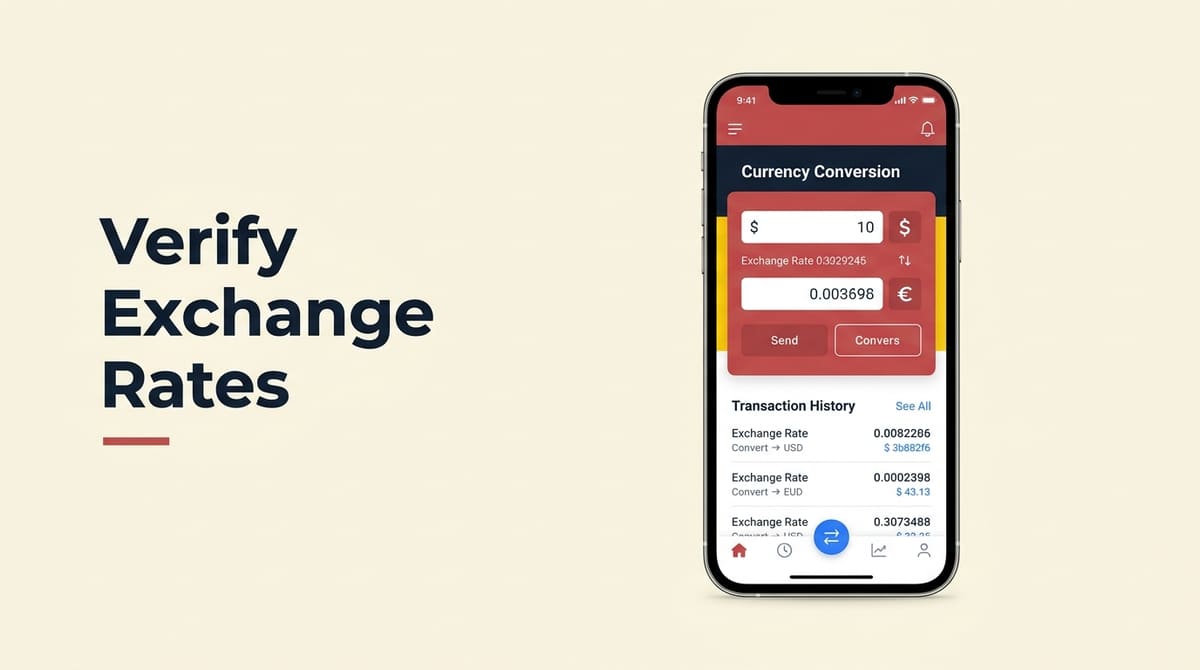
Practical rules for currency conversion for shared travel expenses:
Always decline dynamic currency conversion. When a card terminal or booking site offers to charge you in your home currency instead of the local one, say no. That convenience is paid for with a worse rate. Pay in the local currency and let your card do the conversion.
Log the local-currency amount, not the converted one. Enter 85 euros, not "about 92 dollars." The converted figure is an estimate. The local amount is a fact. A tool that stores both the original currency and the date gives you something you can reconcile against a statement later.
Use the rate from the transaction date. Not the booking date, not the settlement date, not today. This is the single biggest source of "wait, that's not what I paid" disputes.
Reconcile against statements once, at the end. When everyone's card statements have landed, do one pass comparing the logged amounts to what actually hit each person's account. If someone's card charged a foreign transaction fee, decide as a group whether that's shared or personal, and decide it before they bring it up, not after.
You don't need to watch rates daily like a trader. The point of knowing how to track exchange rates while traveling is to catch a bad ATM or a bad terminal offer in the moment, not to time the market. Cash adds a wrinkle.
Receipt Capture and Automation: What Actually Helps
The appeal of receipt scanning is obvious. Snap a photo, the amount appears, you're done. In practice, the useful part is less glamorous than the automation pitch.
What genuinely helps is having the image attached to the expense. When someone questions a charge six weeks later, a photo of the receipt ends the conversation instantly. That's worth more than the seconds saved on typing a number.
What helps less is expecting software to read handwritten receipts in an unfamiliar script, or to correctly identify currency and tax lines on a receipt from a market stall. Automation is good at clean printed receipts in common formats and unreliable elsewhere. Treat extracted numbers as a draft and glance at them.
The automation that matters more for travel is the splitting logic, not the data entry. Equal splits, percentage splits, unequal amounts, and the ability to exclude a member from a specific expense are what save you real time. The person who skipped the boat tour shouldn't need a side conversation about it. You just leave them off that line. Settlement automation is the other genuine time-saver.
We should be clear about what we don't do. Zedger doesn't link to your bank, doesn't ask for UPI access, and doesn't want your OTPs.
Handling Late Expenses, Corrections, and Other Complications
Every trip has them. The friend who remembers on the flight home that they paid for the airport parking. The hotel that charges a deposit and refunds it eleven days later. The group dinner where two people paid half each and nobody wrote it down.

Set a cutoff date. Pick a date a week or so after the trip ends. Anything not logged by then doesn't get reimbursed. Say this at the start, kindly, and people will actually use it. Without a cutoff, the ledger stays open forever and nobody settles.
Log refunds as negative expenses, not as new payments.
Handle split payments as two entries. If two people each covered half a dinner, enter two expenses, not one. Trying to record a single expense with two payers is where tracking systems and human memory both break down.
Don't retroactively change the method. Once the trip has started, switching from equal to proportional splitting mid-way guarantees an argument. Finish the trip on the system you agreed to, then change it next time.
Keep trip money out of your other ledgers. This is why Zedger uses separate Books: a Trip Book for the trip, a Family Book for household spending, a Recurring Book for rent and subscriptions. When trip costs blend into a general expense list, you lose the ability to say "this trip cost us X," which is the number you actually wanted.
Flights vs Ground Expenses: Why They Need Different Treatment
Flights don't belong in the same bucket as everything else. Groups that lump them together end up with lopsided balances.
Here's why. People book flights at different times, from different cities, with different points balances and different tolerances for layovers. One person pays a lot for a direct flight, while another pays much less for a red-eye with two stops.
The standard approach, and the one that causes the fewest problems, is to keep flights personal. Everyone books and pays their own way there, and the shared ledger starts the moment the group is together on the ground. It's simple and fair, and it removes an entire category of dispute.
Share flight costs only when the circumstances genuinely call for it. A chartered flight, a group booking made as one transaction, or an internal hop the whole group takes together as part of the itinerary. Those are real shared costs. Your own transatlantic ticket isn't.
Ground expenses, lodging, local transport, food, and activities, are where shared splitting actually belongs, because everyone consumes them together and in roughly equal measure. That's also where the several currency conversions pile up, since ground costs are paid locally while flights were probably paid in your home currency months earlier.
Choosing a Group Travel Expense Tracker for Multiple Currencies
When you're comparing tools, the features that matter for international trips are narrower than the marketing suggests. Here's what we'd actually check.

Does it store the original currency? Not just a converted figure, the actual amount in the actual currency, with the date. Without that you can't reconcile against statements.
Does it work offline? You will be without data at some point. If the app can't record an expense in airplane mode, half your entries will be reconstructed from memory.
Does it keep trips separate from everything else? A single endless list of expenses isn't a trip record. Separate Books mean your Lisbon trip, your apartment bills, and your family spending stay separate.
Does it support more than equal splits? You need percentage, unequal amounts, and the ability to exclude specific people from specific expenses. Equal-only forces workarounds.
Does it settle intelligently? The smallest-number-of-transfers calculation is what turns a messy web of debts into two or three payments.
Does it ask for your bank? We'd argue it shouldn't need to. Logging what you spent doesn't require access to your accounts, and the apps that don't hold credentials have nothing to lose.
If you want a fuller comparison of what's out there, we wrote a longer piece on finding the best app for splitting trip expenses. And if you just want the tool itself, the travel expense splitter page walks through how Trip Books work.
Putting It Together Before Your Next Trip
The best way to split trip costs abroad isn't a clever formula. It's four decisions made before you leave.
Pick your base currency. Agree how you're splitting, equal, proportional, or hybrid, and say it out loud. Decide who pays for what, so nobody becomes the default banker, and set a cutoff date for late expenses.
On the trip itself, do one thing consistently: log each shared expense in the currency you paid, the moment you pay it. That single habit is what makes splitting travel expenses with multiple currency conversions a non-event rather than a post-trip chore. Everything else, the conversion, the balances, the settlement, is arithmetic a tool handles while you're looking at something more interesting.
Come home, run the settlement, send a couple of transfers, and let the trip stay a good memory instead of an unresolved thread in a group chat.
Get It on Google Play · Download on the App Store
Organizing a trip for a large group, a club, or a company offsite? Contact Sales and we'll help you set it up.
Tags: