Best Bill Splitting Apps for Couples: Managing Shared Expenses Together
What to look for in a bill splitting app for couples: uneven splits, separate books, offline entry and receipts, plus how to split fairly on different incomes.

Arun Andiselvam

Living with someone you love shouldn't mean a running argument about who paid for the gas cylinder. Yet for a lot of couples, money keeps circling back. Not because anyone is being unfair, nobody can remember what happened three weeks ago.
You split rent. Then one of you buys groceries on a card, the other pays the electricity bill by UPI, and somebody books a weekend trip. A month later you're both sitting there trying to reconstruct who owes what from memory and screenshots. It's exhausting. Worse, it makes money feel like a scorecard instead of something you're managing together.
A bill splitting app for couples fixes a very specific problem. It takes the remembering out of your hands. Not the deciding, you still decide what's fair, just the remembering.
Why Splitting Bills as a Couple Is Different From Splitting With Roommates
With roommates, the math is usually clean. Rent divided by heads, electricity divided by heads, done. There's a clear expectation that everyone settles up and nobody carries anyone else.
Couples don't work like that. You share a fridge, a wardrobe, sometimes a bank account, and one of you might earn more while the other is between jobs. You buy things for the household that aren't really "yours" or "mine", a mixer grinder, a sofa, a gift for someone's parents. The strict split-and-settle model that works for a shared flat starts to feel cold when applied to a relationship.
That's where most expense tracking tools get it wrong. They're built around debt. Every entry becomes "you owe me $340," and the app nudges you to settle. For couples, that framing can be genuinely unhelpful, since you don't want a running tally of debt between you. You want to know where the household money is going, who's carrying what, and whether the arrangement still feels balanced as life changes.
The other difference is time. Roommate arrangements often last a year or two, but couples are usually looking at something longer, which means the system has to survive job changes, salary jumps, and the occasional month where everything goes sideways. A rigid system cracks. A flexible one adapts.
So when we talk about an expense splitting app for couples, we're really talking about something closer to a shared household ledger with splitting built in, not a debt tracker with a relationship bolted on.
The Methods Couples Actually Use (And When Each One Breaks)
Before picking a tool, it helps to name the system you're using. Most couples fall into one of four patterns, and each one has a failure point.
Split everything 50/50. Clean, simple, and the default for a lot of younger couples. It breaks the moment incomes diverge. If one partner earns twice as much, an even split means the lower earner feels the squeeze on every single expense while the higher earner barely notices.
Assign bills by person. One of you covers rent and internet, the other covers utilities and groceries. This is a genuinely smart approach we see working well, partly because it kills the need for constant tracking. You're not logging every transaction, you're just making sure your assigned bills get paid. The weakness is that the balance drifts quietly. Grocery costs climb, internet stays flat, and six months later the split isn't what you agreed to. This method needs a scheduled check-in, not just good intentions.
The joint pot. Both partners deposit a proportional share of income into a common account, and every shared expense comes out of that account. This is probably the most durable arrangement for couples with uneven incomes, because the fairness is built into the deposit, not negotiated at every purchase. It does require discipline about what counts as "shared," and it also needs a record somewhere, otherwise you end up with a joint account balance and no idea what drained it.
Casual settling. Someone pays, someone sends money back later. This feels relaxed and low-friction for about two months. Then one of you stops sending, the other stops asking, and resentment starts quietly accumulating.
Whichever method you use, the gap is the same: a record. That's the job an app is actually doing.
What the Best Bill Splitting App for Couples Should Actually Do
If you're comparing options, here's what matters more than feature counts.
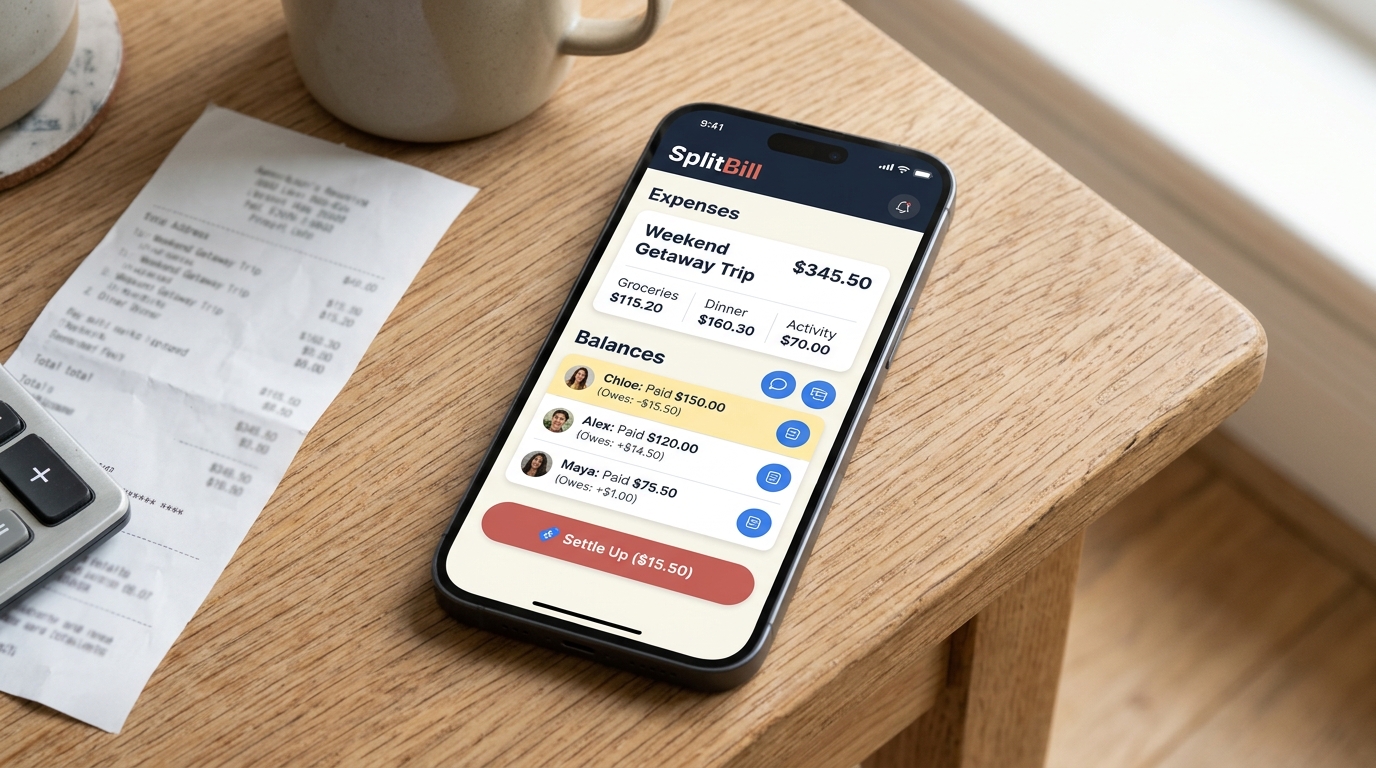
Uneven splits need to work. Not just 50/50, but 25/75, 40/60, or whatever reflects your incomes. Couples want proportional splitting and keep running into tools that treat an even split as the only real option. A good app lets you set the ratio once and apply it, so you're not doing percentage math on your phone at the checkout counter.
Different kinds of money need their own space. Your rent and electricity don't belong in the same list as your Goa trip or the money you're collecting for your friend's farewell gift. When everything lands in one feed, nothing is readable. Zedger uses distinct Books for exactly this reason, a Recurring Book for rent and monthly bills, a Trip Book for travel, a Family Book for household spending. You open the one you need and the rest stays out of the way.
Your bank login shouldn't be required. Plenty of finance apps want bank credentials, UPI access, or OTPs to "automate" things. For a lot of people that's an instant no, and we think that caution is reasonable. Zedger never asks for any of it. You enter what you spend, and your financial accounts stay entirely yours.
Offline use matters. Shops with bad signal, basements, trains, trips to places with patchy data. If the app can't take an entry without a connection, you'll stop using it. Offline entry with automatic sync later means the habit survives real life.
It should be uncomplicated enough that both of you use it.
Receipt Scanning and Photo-Based Bill Splitting
A receipt scanner is worth having, not because manual entry is hard, exactly, but because it's the thing people skip when they're tired.
The value is twofold. First, speed. Snapping a photo takes a second, while typing an amount and a category takes longer than it sounds when you're standing in a parking lot with bags. Second, and more importantly, the record. A line item saying "$2,840, groceries" tells you nothing in March about what you actually bought in January. A photo of the bill tells you everything. When one of you questions a charge months later, the receipt ends the conversation in ten seconds instead of turning into a guessing match.
Photo-based records also matter for shared purchases that get split unevenly, things like utility bills, furniture, appliances, and medical expenses, anything with a warranty.
How to Split Fairly When You Earn Different Amounts
This is the hardest part of couples' finances, and it's rarely a math problem. It's a conversation problem.

The pattern we see over and over: one partner feels the split is unfair, doesn't know how to say so, and so says nothing. The silence builds. By the time it comes out, it's not a discussion about percentages, it's a bigger argument about fairness in the relationship generally.
A few things make that conversation easier.
Start from data, not feelings. "I feel like I'm paying more" invites disagreement. "Here's the last three months, I covered this much, you covered this much" doesn't. Nobody has to defend a position when the numbers are on the table. This is the strongest argument for tracking shared expenses at all. It converts a vague unease into a visible fact that you can both look at together.
Talk about percentage of income, not rupees.
Set a review date. The best protection against drift is a standing check-in, quarterly works for most couples. Make it regular so raising it never feels like an accusation. "It's our review month" is a much softer opening than "we need to talk about money."
Individual fixed costs from usage. This one comes from the roommate world but applies just as well. On utility bills, there's usually a fixed component, connection charges, delivery fees, flat monthly amounts, and a variable usage component. If one partner is away for a stretch, they can reasonably cover their share of the fixed charges without paying for electricity they didn't use. Splitting a bill this way takes an extra minute and prevents a whole category of low-grade friction.
None of this requires an app, but having the record makes all of it dramatically easier.
Handling the Credit Card Delay Problem
Here's a friction point that trips up almost every couple: credit cards decouple spending from paying.
You buy something in the first week of the month. The statement arrives weeks later. By the time money actually leaves an account, neither of you remembers that $4,200 was a shared purchase and $1,100 was personal. The card statement is a wall of merchant names with no context, and reconstructing it becomes a weekend chore nobody wants.
The fix is to log at the point of spending, not the point of paying. Enter the expense when the card is swiped, note who it was for. Let the statement be a payment event rather than a tracking event. This sounds obvious and it's the step everyone skips.
This is also where offline entry earns its keep. If you can only log expenses when you have signal, you'll tell yourself you'll do it later, and later never comes. The ability to add an entry the moment it happens, in a shop basement, on the metro, wherever, is what turns tracking from a chore into a reflex.
A good expense splitting app for couples should also let you mark who actually paid versus who the expense was for. Those are two different things, and conflating them is how card-based tracking falls apart.
App vs. Spreadsheet: Does a DIY System Hold Up?
Plenty of couples build their own setup in Google Sheets. Formulas for proportional splits, a tab per month, sometimes even automated reminders. We have real respect for this. A well-built sheet is flexible in ways no app can match, it's free, and it does exactly what you designed it to do.
But there are three places DIY systems tend to break.
Mobile entry. Spreadsheets are fine on a laptop and genuinely unpleasant on a phone. Since most shared spending happens away from a desk, the entry step gets deferred, and deferred entry is unentered entry.
Single ownership. Shared systems need to be genuinely shared, not managed by just one partner while the other checks out entirely.
Maintenance. Someone has to keep the formulas working and the tabs organized, and that upkeep tends to fall on whoever built the sheet in the first place.
The honest comparison is this: if one of you genuinely enjoys building systems and you're both comfortable in the sheet, keep it. If you've built one and it's already going stale, that's not a discipline failure, it's the tool asking too much. An app's advantage isn't features. It's that both of you can add an expense in four seconds from wherever you are.
Getting Both Partners to Actually Use It
The most common reason a tracking system fails isn't that it was the wrong system. It's that only one person used it.
Activation is a real problem and it deserves honesty. If you're the partner who cares more about tracking, pushing the app on your partner as a correctness project will fail. Framing it as something that reduces work for both of you has a much better chance.
A few things that help:
Start with one Book, not five. Set up a Recurring Book for rent and monthly bills only. That's maybe six entries a month, mostly predictable. Once that's a habit, add groceries. Once that's a habit, add trips. Trying to track everything from day one guarantees abandonment.
Make one person the logger initially. Shared visibility matters more than shared data entry. If your partner just opens the app once a week to look, that's a win. Entry habits follow visibility, not the other way around.
Use a settlement rhythm instead of running totals. Constantly visible debt between partners feels adversarial.
Pick something cheap or free so cost isn't a reason to quit. Zedger's free plan covers 6 months of expense history, 4 books, and 10 members per book, which is more than most couples need. Pro is $1/month or $8.99/year, and VIP is $1.99/month or $17.99/year, with no card needed to try it and the option to downgrade anytime.
Trends, Budgets, and Categories That Fit Real Life
Once tracking is a habit, the real payoff shows up: you can see patterns.
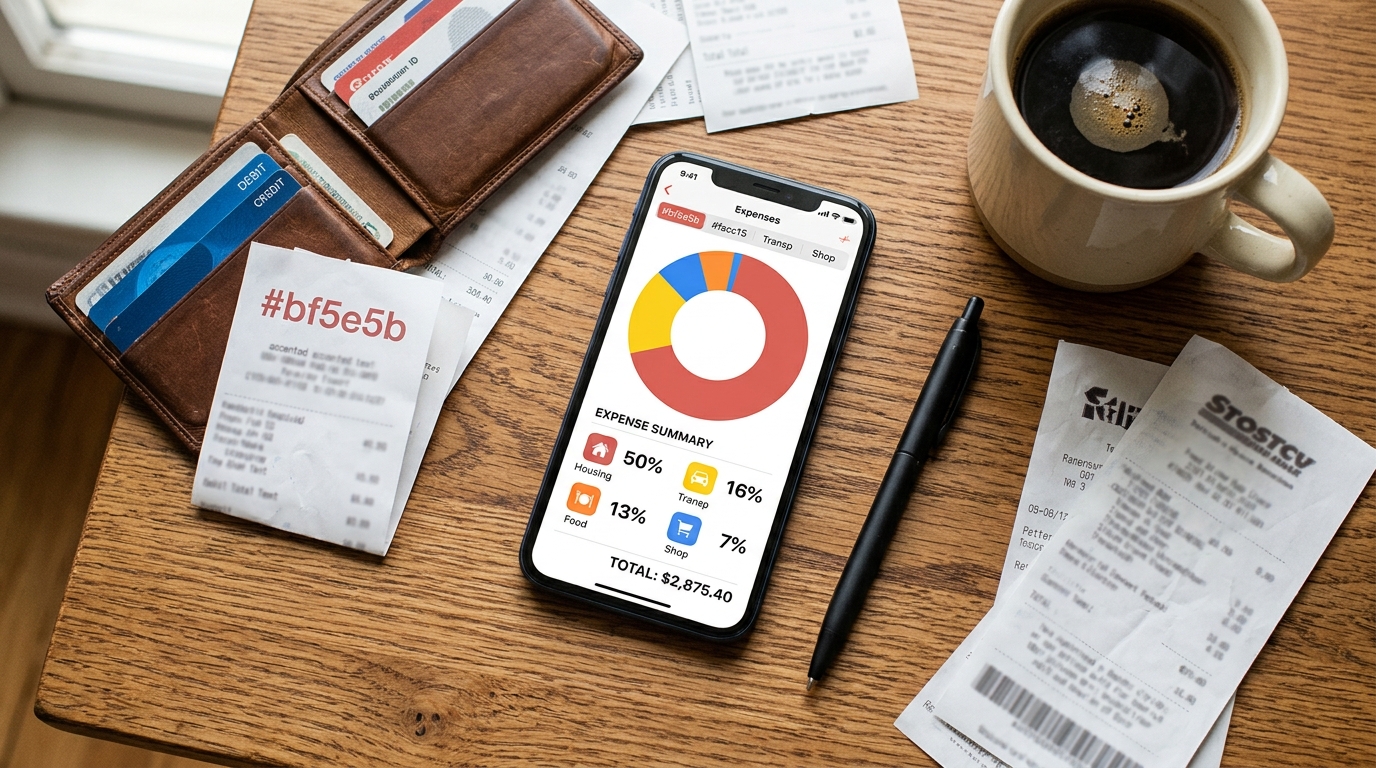
Month-by-month trends tell you things a single month can't. Groceries creeping up steadily. One category that spikes every festival season. A subscription you both forgot about.
Categories matter more than people expect. Default lists usually cover rent, food, and utilities, then leave you cramming everything else into "Other." Real couple spending doesn't fit that. Look for an app that lets you add your own categories freely.
On payment platform integration: a lot of couples ask whether an app can link to a payment service or a digital wallet and settle automatically. We'd push back gently here. Integration means handing over access to accounts, and for a tool whose actual job is remembering, that's a large privacy cost for a small convenience gain. Zedger keeps the record and the money discrete, you settle however you normally would, through UPI, transfer, or cash, and just mark it settled. Your data stays encrypted, isn't sold, and can be kept on-device if you prefer. For couples wary of bank-linked apps, that separation is the point, not a limitation.
Picking the Right Tool for Your Situation
If you're a couple sharing a flat with others, the roommate case and the couple case overlap heavily. Our guide to bill splitting for roommates covers rent, utilities, and routine bills in more depth, and most of it applies directly. If you want to see how different tools stack up before committing, our breakdown of the best roommate expense tracker apps walks through the trade-offs.
For couples specifically, our shortlist of what matters: proportional splits beyond 50/50, separate Books so household money doesn't blur into trip money, and offline entry that doesn't depend on signal. Add receipt attachments and custom categories, and skip bank linking entirely. That's it.
There isn't a universal answer to what the best bill splitting app for couples is, because the right one depends on how you've decided to split. Joint-pot couples need good category tracking more than split ratios. Assigned-bills couples need trend visibility to catch drift. Even-split couples need fast entry above all. Know your method, then pick the tool that supports it rather than one that forces you into a different model.
Families already use Zedger to keep shared spending straightforward, and the setup for a couple takes about five minutes. Create a Recurring Book, add your monthly bills, invite your partner, and you've replaced the guessing with a record you can both see.
GET IT ON Google Play · Download on the App Store
Managing shared money for a housing society or a larger organization? Contact Sales and we'll walk you through a custom setup.
Tags: