How to Split Rent with Roommates: Fair Methods and Fixes
How to split rent with roommates fairly: equal, by room size, amenities or income. Covers common areas, shared bedrooms, bidding, utilities and a written agreement.

Arun Andiselvam

Moving in with roommates is one of the fastest ways to cut your monthly costs. It's also one of the fastest ways to discover that "fair" means something different to everybody in the apartment.
Here's the thing we keep noticing. The math is rarely the hard part. Dividing ₹45,000 by three takes five seconds, but the conversation around that math is where things get tricky. Who gets the room with the attached bathroom? Does the person who runs the AC all night pay more? What happens when one roommate goes home for three weeks and still expects a discount? Bill splitting between housemates puts pressure on relationships even when the division itself is perfectly straightforward.
This guide covers how to split rent with roommates in a way that holds up over a full lease, not just on move-in day. We'll walk through the common methods, the awkward edge cases nobody plans for, and how to keep a record so nobody has to rely on memory six months from now.
Start With the Question Nobody Asks Out Loud
Before you pick a method, agree on what you're actually paying for. Most disagreements trace back to two people having different mental models of the deal.
One person thinks rent buys square footage. Another thinks it buys a place to sleep plus equal access to the kitchen, the living room, the balcony, and the washing machine. A third thinks it should track income, since living with friends loses its point if one of them is quietly broke every month.
None of those views is wrong, but they need to be said out loud before the lease is signed. Renegotiating later is far harder than negotiating now. Once a number has been paid a few times, it starts to feel like the default, and defaults are sticky.
Spend twenty minutes on this conversation. Say what you think you're paying for, then let everyone else say it too. Pick a method once that's settled.
The Four Main Methods for Splitting Rent
Equal Split
Everyone pays the same amount. Total rent divided by the number of people, done.
This works beautifully when the bedrooms are genuinely comparable. Same rough size, same light, same noise, same distance from the bathroom. It's also the easiest to defend, because there's nothing to argue about. If you're flat-sharing with similar rooms, don't overthink it.
Here's where it breaks down. The moment one room is clearly better, the Equal Split quietly becomes a subsidy. The person in the small interior room is paying the same as the person with the balcony, and they'll notice around month three.
Split by Room Size
Measure each bedroom, add up the total bedroom square footage, and charge each person their proportion.
Say the apartment is ₹36,000 a month and the bedrooms are 200, 150, and 100 square feet, 450 total. The proportions are 44%, 33%, and 22%, which works out to roughly ₹16,000, ₹12,000, and ₹8,000.
A pure square-footage split is usually too aggressive, though. It ignores every shared space in the apartment.
Split by Room Size Plus Amenities
Square footage is a starting point, not a verdict. A 120-square-foot room with an attached bathroom and a built-in wardrobe can easily be worth more than a 160-square-foot room with neither.
Things worth putting a value on include a private bathroom and closet or wardrobe space. Also factor in a window that actually opens, natural light, street noise, kitchen proximity, and whether the door has a lock. You don't need a formula. You need everyone to agree on a rough premium, something like "the attached bathroom is worth about two thousand a month to us," and apply it.
Split by Income
Each person pays a percentage of rent proportional to their income. If one person earns ₹80,000 and the other earns ₹40,000, the split is two-thirds and one-third.
This is uncommon between friends and more common between partners or long-term housemates with very different earnings. It requires real transparency about salaries, which not everyone wants, and it also needs a revisit clause, because incomes change.
How to Handle Common Area Usage in Rent Calculations
This is the gap in most rent-splitting advice, and it causes more quiet resentment than any other factor.
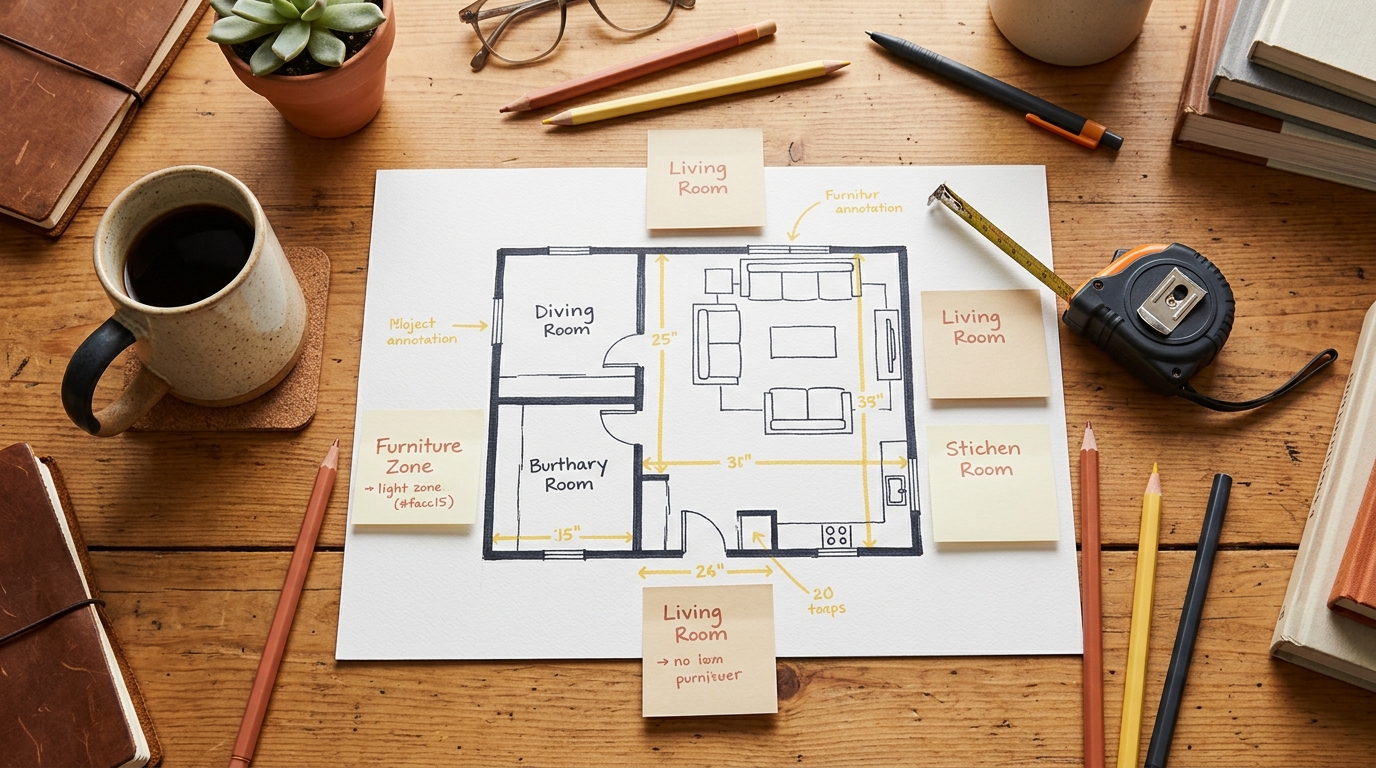
If you split purely by bedroom square footage, you're pretending the living room, kitchen, hallway, and bathrooms don't exist. Everyone uses those spaces equally, or at least has equal right to. The person in the tiny room isn't getting one-fifth of a kitchen.
The cleaner approach is a two-part split. Decide what portion of the rent covers private space and what portion covers shared space. Many households land somewhere around half and half, though there's no fixed rule. Split the shared-space half equally per head, and split the private-space half by room size and amenities.
Here's how that plays out. Rent is ₹30,000. You decide ₹15,000 covers shared space and ₹15,000 covers bedrooms. Three people, so everyone owes ₹5,000 for shared space. Bedrooms are 200, 150, and 100 square feet, so the bedroom portion splits ₹6,667, ₹5,000, and ₹3,333. Final rents land at ₹11,667, ₹10,000, and ₹8,333. Compare that to the pure square-footage split, which would have been ₹13,333, ₹10,000, and ₹6,667, much harsher at both ends.
Occupancy complicates this further. When one bedroom houses a couple and the others house individuals, two people are using the kitchen, the shower, the sofa, and the Wi-Fi where one person was before. A common fix is to count the shared-space portion per person rather than per room. The couple pays two shares of the common-area half and one room's worth of the private half. It's not perfect, but it's defensible, and defensible is what you need.
Splitting a Shared Bedroom: Space, Privacy, and Legal Questions
Sharing a bedroom to save money is a real strategy, and it's often priced badly.
The instinct is to split that room's rent in half between the two occupants. But the sacrifice involved is much bigger than half a room. You can't be alone in your own home. You can't have a partner over without negotiating it. You can't control when the lights go off or when you wake up. That's a different standard of living from having a small private room, and the price should reflect it.
A fairer approach treats the shared room as significantly discounted per person. Not just halved, but discounted beyond that, with the difference absorbed by the people in private rooms. If nobody in a private room is willing to accept that, the shared-bedroom arrangement probably isn't as mutually beneficial as it looks.
There's a legal layer too. Your lease might also cap the number of occupants outright, which means adding a fourth person to a three-person flat could breach it.
We're not in a position to give you a legal reading on your situation. What we'd say plainly: check your lease, check your local occupancy rules, and tell your landlord who is living there. An arrangement that saves money but voids your tenancy isn't a saving.
Tiebreakers: Bidding Systems and the Coin Flip
Sometimes two people want the same room and no formula settles it. There are two honest ways through.
The bidding method. Everyone privately writes down the maximum they'd pay for each room, with the total across all rooms equaling the full rent. Reveal the bids. The person who valued each room most highly gets it and pays what they bid. If the bids add up to more than the rent, split the surplus evenly as a discount off everyone's number.
Example: rent is ₹30,000 for three rooms. Person A bids ₹14,000 / ₹9,000 / ₹7,000. Person B bids ₹13,000 / ₹10,000 / ₹7,000. Person C bids ₹12,000 / ₹10,000 / ₹8,000.
The beauty of this is that nobody can complain. You chose your number. If you wanted the big room more, you should have bid more for it.
The coin flip. For genuinely identical rooms, flipping a coin is faster and causes no lasting damage. Use it when the difference is small enough that the loser won't be thinking about it in March.
One option worth knowing is rotating rooms mid-lease. If the lease is long and the rooms differ, swapping at the halfway point with the rent amounts swapping too can feel fairer than either person winning outright.
Why You Should Split Utilities Separately From Rent
Rent and utilities are different problems and deserve different rules. Rent is fixed and tied to space. Utilities are variable and tied to behavior.

The cleanest default is to split utilities equally per person, thirds in a three-person household, regardless of how the rent is divided. Keep the rent per room if bedrooms are comparable, and keep the utilities per head. This separation prevents a lot of confusion, and it stops people arguing about electricity when what they really mean is that they don't like their room.
Equal utility splits do generate their own friction, and it usually centers on air conditioning. That's the real lesson: the fight is almost never about the money.
Separate meters solve this where they exist. Where they don't, consider a seasonal adjustment. Try equal splits most of the year, with a slightly weighted split during the hottest months for whoever keeps the AC running longest. Agree on it in advance, not in July.
How Should Roommates Split Rent When Circumstances Change?
A split that worked in month one often stops working by month seven. Someone travels for work, someone's partner effectively moves in, or someone loses a job.
Decide the rules for these before they happen. Deciding them during is where friendships go to die.
Extended absences. If someone's away for a few weeks, do they owe full rent? Almost always yes, since the room is still theirs and the landlord still wants the full amount. Utilities are more negotiable, since they genuinely weren't using the power. A common compromise is full rent, reduced utility share after a set stretch of absence.
Partners staying over. A partner who's there most nights is using the hot water, the electricity, and the kitchen. Multiple households set a threshold. Beyond a certain number of nights a month, that person contributes to utilities. Saying this plainly early is much kinder than letting it build.
Someone moving out mid-lease. Who finds the replacement matters here, and so does whether the remaining group splits the empty room's rent until it's filled, or the departing person covers it. Write it down now.
So, how should roommates split rent when one person's situation shifts permanently? Reopen the conversation on a schedule rather than in a crisis. A short check-in every few months, just asking if everyone's still okay with this, catches resentment while it's still small enough to fix.
Resolving Disputes Over Bill Payments Without Blowing Up the Flat
When someone hasn't paid, the instinct is either to say nothing for weeks or to say everything at once. Both go badly.
A few things that actually work:
Separate the record from the argument. If there's a shared log showing exactly what was paid and by whom, the conversation stops being "I think you owe me" and becomes "here's the number." Memory is a terrible accountant, and nobody wins an argument about what happened in August.
Raise it early and small. A message the week something's due is a reminder. A message six weeks later is an accusation, even when you don't mean it that way.
Ask before you assume. Sometimes nonpayment is cash flow, not principle. Someone between paychecks will often agree to a delayed date if you give them the chance to say so.
Name the real objection. When someone refuses to pay a share, the stated reason, usually that the amount is unfair, is often standing in for something else. It might be feeling overruled, or feeling like their preferences don't count, or feeling the arrangement changed without their input. Addressing the actual grievance resolves things that arguing about the number never will.
Agree a consequence in advance. Not a punishment, just a plan. Figure out who covers the shortfall if a bill is about to go unpaid, and how that person gets made whole.
Put the Roommate Agreement in Writing Before You Move In
Everything above should end up in a single written document, signed before anyone unpacks a box.

This isn't about distrust. It's about the fact that four people will remember a verbal agreement four different ways, and all of them will be sincere. A written agreement means you're arguing with a document instead of with each other.
Cover at minimum:
- Each person's rent amount and why. The method you used, not just the figure
- Who holds the lease and whose name is on it
- How utilities are split and which bills are included
- The due date each month and who pays the landlord
- The deposit: who paid what, and how it comes back
- Travel and extended absence rules
- Guest and partner policies
- What happens if someone moves out early
- How and when the agreement gets revisited
Keep it readable, since a page is plenty. Everyone gets a copy.
Track It All in One Place Instead of a Group Chat
Once the agreement exists, you need a running record. This is where most households fall apart, because the record lives in a chat thread where it gets buried under food orders and memes.

Zedger is built for exactly this. You create a Recurring Book for rent and monthly utilities, and the bills you pay every single month get set up once instead of re-entered every time. Shared one-offs, like a new water filter or a plumber visit, can live in their own Book, so the ₹400 someone fronted for detergent never gets tangled up with the rent ledger. Smart Settlements then works out the simplest set of payments to square everyone up, rather than leaving four people owing four other people small amounts.
Two things matter here for roommates specifically. Zedger never asks for your bank credentials, UPI access, or OTPs, and nothing is linked to your accounts beyond what you record. It also works offline, so you can log an expense standing at the shop with no signal and let it sync later.
The free plan covers four Books, ten members per Book, and six months of expense history, which is enough for most flats.
If you want the full picture of how to run shared housing costs month to month, our bill splitting app for roommates page walks through it. And if you're weighing options, we've compared the best bill splitting app for roommates choices honestly, including where we don't come out ahead.
The Short Version
Pick a method that matches your apartment. Equal Split for equal rooms. Split by Room Size Plus Amenities when bedrooms differ. A two-part split when common areas matter. Price shared bedrooms below half. Use a bidding round or a coin flip when a formula can't decide.
Split utilities separately, per person, and talk about the AC before summer. Write it all down before move-in, including the awkward scenarios, then keep a shared record so nobody has to argue from memory.
That's really all there is to how to split rent with roommates. A method everyone agreed to, written down, with the receipts kept somewhere neutral.
GET IT ON Google Play · Download on the App Store
Managing a housing society or a large shared property? Contact Sales about custom plans.
Tags: