Travel Expense Splitting for Destination Weddings and Events
Travel expense splitting for destination weddings and events: agree the method first, split rentals by room tier, run a kitty or rotation, and track it all in one place.

Arun Andiselvam

Someone in your group chat just posted a villa link with eleven bedrooms and a pool. The replies are a wall of celebration emojis. Nobody has said a word about money yet. That silence is where most destination wedding friendships start to fray. Not at the wedding, not at the airport, but three weeks later when one person has fronted a deposit, two people have gone quiet, and nobody can agree on whether the person in the tiny attic room should pay the same as the couple in the suite with the balcony.
Travel expense splitting for destination weddings and events is really just a set of decisions made early, out loud, and written down somewhere everyone can see. Get those decisions right and the trip stays about the wedding instead of about the money.
Start Here: The One Rule That Prevents Almost Every Money Fight
Agree on the splitting method before anyone books anything.
That is the whole rule. It comes from an expectation nobody stated. One person assumed the house would be split by room size. Another assumed everyone would pay equally because that is how it worked last time.
So before the deposit goes down, get three things settled in writing:
- How the big shared costs split. The house or hotel block, the van rental, the catered welcome dinner. Equal? By room? By headcount including kids?
- What counts as shared versus personal. Groceries and the cleaning fee are usually shared. The spa afternoon and the duty-free gin are not.
- Who is fronting money, and when they get paid back. The person whose card holds the booking should not be financing the group for four months.
Write those three answers in the group chat and pin the message. It takes ten minutes, and it is the single highest-return thing you can do for the trip. Splitting costs for destination wedding travel gets dramatically easier when the rules exist before the money does.
How to Split Wedding Travel Costs When Incomes Are Unequal
When one person earns considerably more than the other, splitting a shared trip down the middle can quietly become a problem. The same number is a rounding error for one person and a month of groceries for another.

There is no single correct answer, but there are three workable ones.
Equal split. Everyone pays the same share of shared costs. It is simple and transparent, and it is the default most groups land on. It works best when the group is roughly similar financially, or when the total is small enough that the difference does not bite.
Proportional split. People contribute in rough proportion to what they earn or what they can comfortably manage. This does not require anyone to publish a salary. It can be as loose as "the four of us who are further along in our careers will each cover a bit extra on the house so the rest come in lower."
Tiered split by what you actually use. Rather than indexing on income, index on consumption. The couple in the master bedroom pays more. The person who skips every excursion does not pay for excursions. Nobody has to discuss their finances at all, and the math still ends up fairer than a flat divide.
Whichever you choose, say it plainly and apply it consistently. The resentment comes from a method that changes depending on who is asking.
Splitting Vacation Rental Costs When the Rooms Aren't Equal
Almost every destination wedding involves at least one big rental house, and almost every big rental house has one bedroom that is obviously better than the others. An equal split means the person on the pull-out sofa in the den pays the same as the couple with the ensuite and the ocean view. That is the fastest route to a quiet grudge.
Here are four methods that work, roughly in order of how much math they require:
Per person, not per room. Divide the total by the number of adults sleeping in the house. Uncomplicated and fair when the rooms are genuinely similar. Falls apart the moment one room clearly isn't.
Tiered by room quality. Before booking, look at the floor plan together and sort bedrooms into two or three tiers. Premium, standard, and "it's a bed, technically." Assign a multiplier to each tier, then divide. The couple in the premium room pays a bigger share, the solo traveler in the box room pays less, and the total still adds up to the rental price.
Split by square footage or bed count. Measure or estimate the space each room gives its occupants, then divide the total in proportion to that, so a bigger room with more beds carries a bigger share without anyone needing to rank the rooms by feel.
Auction or choose-then-pay. Let people bid or claim rooms in order, with the best rooms costing more and the money redistributed across the group, so the people who most want a particular room are the ones paying extra for it.
A detail that catches groups out: shared fees. Cleaning charges, service fees, and the resort levy are not attached to any one bedroom, so they should be split per person regardless of which room anyone has.
Shared Expenses for Wedding Guests: What's Genuinely Shared and What Isn't
Groups waste enormous energy arguing about things that were never actually group expenses. A clear category list, agreed on day one, saves all of it.
Kids are the category that trips people up most often. Families traveling with children consume a real share of the groceries and often need a larger room. Charging a four-year-old a full adult share for a wine-heavy group dinner is a hard sell. Agree the kid rate in advance and nobody has to raise it awkwardly at the table.
Shared expenses for wedding guests work best when the categories are boring and obvious. If you find yourselves debating a single receipt for more than two minutes, the category list wasn't specific enough.
Shared Funds vs. Daily Rotation: Two Systems That Actually Work
Once you know what is shared, you need a mechanism for paying it. Two approaches hold up well across a multi-day event.
The shared kitty
Everyone contributes an agreed amount into a common pot before the trip, enough to cover the expected shared costs with a small buffer. One or two people hold it and pay for groceries, transport, and group meals out of the pot, and whatever is left at the end gets divided back out.
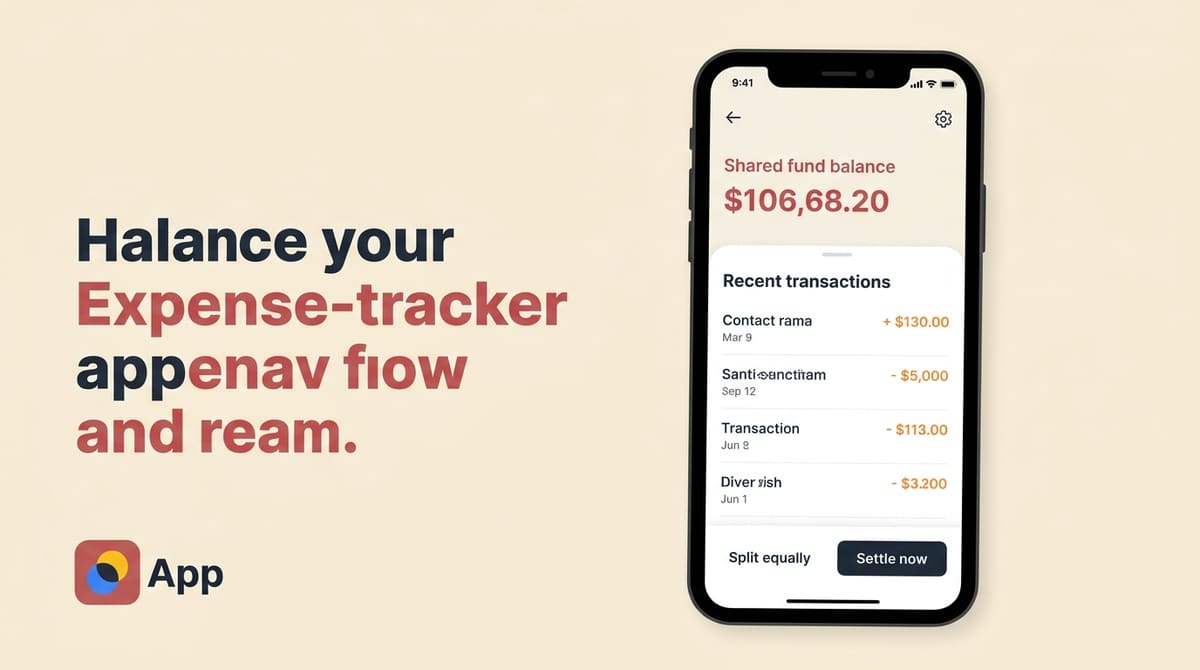
The strength here is psychological. Nobody is pulling out a card at every till, nobody is quietly tallying who has paid more, and the trip feels prepaid rather than drip-fed. The weakness is that the kitty needs a visible running balance, or people start to worry about where their money went. Post the balance in the group chat each evening, or keep it in a shared ledger everyone can open. This is also exactly what a fundraising goal tracker is built for. You set a target per person, see who has contributed, and the chasing takes care of itself.
Daily rotation
A different person covers all shared costs each day. Day one is Priya, day two is Marcus, day three is the Chens. Nobody splits anything in the moment, and over a week it roughly evens out.
Rotation is wonderfully low-friction during the trip, and it keeps card machines out of every interaction. It has two catches. Days are not equal, and the day with the boat trip and the big dinner costs several times what the beach-and-sandwiches day costs. The rotation handles the convenience. The log handles the fairness.
A hybrid often beats both: a modest kitty for predictable costs like groceries and transport, plus rotation for restaurant meals. Whatever you pick, log it. A system nobody records is just a story everyone remembers differently.
Budgeting for Destination Wedding Guests: Do the Math Before You RSVP
The single most useful thing an invited guest can do is build the full number before saying yes, not the flight, not the hotel, but everything.
Work through this list honestly:
- Round-trip airfare, plus bags and seat selection
- Nights in a hotel or your share of the house, and count the arrival day and departure day, which guests routinely forget
- Airport transfers at both ends, plus local transport
- Passport renewal or visa fees, if applicable
- Travel insurance
- Meals on the days with no organized event
- The gift
- Pre-wedding events: the bachelor or bachelorette trip, the shower, the rehearsal dinner if guests pay their own way
- Time off work, and whether it is paid
- A buffer for the things you haven't thought of, because there are always things you haven't thought of
Add it up before you reply. Budgeting for destination wedding guests fails most often not because the trip is extravagant, but because the cost arrives in eight separate installments spread over a year, and no one ever sees the total in one place.
If the number is too high, the right move is to say so early and kindly. A declined invitation six months out is a scheduling detail. A cancellation three weeks out, after seats have been counted and rooms reserved, is a problem for the couple. Honesty gets easier the sooner you offer it.
Can't Afford vs. Won't Attend: How Couples Should Read an RSVP
Destination weddings sort guest lists in ways nobody intends.
If you are the couple, a few things help. Give people far more notice than feels necessary, because the only real lever most guests have is time to save. Publish the full expected cost yourself, an honest range for flights, nights, and the events you are asking people to attend, so nobody has to guess or ask. Offer a genuine range of accommodation, not one resort at one price point. Make it unmistakably straightforward, in words and more than once, that a no is allowed.
Then let go of reading the tea leaves. Some people who decline are heartbroken about it, and some are relieved. Treating every regret as a sincere one is both the kinder assumption and the more accurate one in most cases.
Those gestures land, and they cost a fraction of what the trip does.
Bridesmaid and Groomsman Costs: Keeping the Wedding Party Out of Debt
The wedding party carries the heaviest load, and it is getting heavier.

If you are asking someone to stand up with you, state the expected total before they accept. "Here is roughly what I think this will cost you, across the whole year" is one of the kindest sentences in wedding planning. It lets people say yes with open eyes or decline without inventing an excuse.
Then reduce the number where you can. Let people wear a dress they already own in an agreed color, or pick something genuinely rewearable. Make professional hair and makeup optional rather than assumed, and keep the pre-wedding events to one. Cover what you can yourself, and say which parts those are.
If you are in the party, you are allowed to set a limit.
Managing Bachelor and Bachelorette Party Spending
The fix is to start from the budget rather than the plan. Before anyone researches a single venue, ask every invitee privately for the maximum they can spend, all in. Take the lowest number, or close to it, and build the weekend around that figure. Nobody should have to announce their ceiling in a group chat.
A few guardrails that hold up:
- Make every optional cost genuinely optional, with no social penalty for skipping. The club table and the group bottomless brunch are opt-ins.
- Collect a flat per-person amount up front for the core shared costs rather than settling at the end. People budget better for a known number paid in advance than for an unknown number arriving later.
Shorter and closer to home saves more money than any other decision. Two nights somewhere drivable, planned well, beats five nights somewhere expensive that half the group resented paying for.
What a Realistic Small Destination Wedding Budget Looks Like
Couples regularly ask whether a destination wedding for twenty to fifty guests is possible under twenty thousand dollars. It can be, but only with specific tradeoffs, and it helps to know which ones move the number most.
The levers that matter:
Guest count. This dominates everything. Every per-head cost, food, drink, welcome bags, seating, transport, multiplies by it. Cutting the list is more powerful than negotiating any single vendor.
Destination. Cost of living at the location sets the floor for catering, flowers, staff, and venue. A beautiful place with a lower cost base changes the whole arithmetic.
Season and day. Off-peak and midweek pricing is not a small discount. It is often the difference between viable and not.
All-inclusive versus assembled. Resort packages bundle venue, catering, and coordination at a predictable price, which keeps overruns down. Building it yourself from independent vendors can cost less, but it takes far more work and carries more risk from a distance.
Format. A ceremony plus long lunch costs meaningfully less than a full evening reception with a band and an open bar until midnight.
Be realistic about what the number includes, and build one document with every line in it, including the things you expect to be small.
And remember the invisible part of the budget: what you are asking guests to spend.
Using a Group Trip Expense Tracker for Weddings Instead of a Spreadsheet
Spreadsheets are where good intentions go to die. Somebody builds a careful tab in month one, two other people edit it on their phones, and a formula breaks. By month four nobody trusts the totals. Multiply that across flights, a house, a bachelorette weekend, and a shared gift, and the whole thing collapses into one person's screenshots.

A dedicated group trip expense tracker for weddings fixes the mechanics. Each entry records who paid and who it covers.
Distinct Books keep the categories from bleeding together, which matters more than it sounds. The bachelorette weekend goes in its own Book, and the group gift goes in a fundraising goal tracker where everyone can see who has contributed without anyone being chased. Because the app works offline, you can log the taxi fare in a resort with no signal and it syncs when you are back on wifi, a real advantage when splitting hotel and travel costs for events held somewhere remote.
On the questions people reasonably ask before installing anything: Zedger never asks for bank credentials, UPI access, or OTPs, because it tracks what you tell it rather than reading your accounts. Sensitive data can be stored locally on your device. And if you already use something else, you do not have to migrate your life. Start one Trip Book for this wedding and see whether purpose-built Books beat one generic list. Our guide to finding the best app for splitting trip expenses walks through the comparison honestly.
The same mechanics serve any group event: reunions, milestone birthdays abroad, a festival house. A group event expense splitting app earns its place by making the record boring and public, so the conversation never has to become personal. You can see how the travel expense splitter handles multi-currency trips and group settlements in more detail.
Bringing It Together
Do those things and the awkward conversations mostly stop happening, because there is nothing left to be awkward about.
Set up a Trip Book for your wedding week, an individual one for the bachelorette, and a fundraising goal tracker for the group gift. Then let the numbers speak for themselves.
Get It on Google Play · Download on the App Store
Planning something large? Contact Sales and we'll help you set it up.
Tags: