Who Pays First in Group Trip Expenses? A Fair Split Guide
Who pays first in group trip expenses? Collect before you book, set deadlines with teeth, assign categories, and keep the organizer from fronting the whole trip.

Arun Andiselvam

Someone has to tap their card first. The question of who pays first in group trip expenses sounds small, until the deposit is due, flights are climbing in price, and everyone in the chat waits for someone else to volunteer.
Here's the short answer. The person who pays first should be whoever is booking the specific thing, and they should only pay after everyone else has sent their share. Prepayment, not reimbursement.
The rest of this guide gets into the mechanics: how currencies complicate things, how group size changes the right system, and how rotation and category-based approaches hold up once money actually starts moving. We'll also look at how to keep the organizer from quietly carrying the whole trip on their credit card.
Who Pays First in Group Trip Expenses: The Short Answer
The cleanest rule is that money moves toward the booker before the booking happens. If you're the one reserving the villa, you collect everyone's share with a firm deadline, and you book once the money has landed. If your friend is renting the van, they collect for the van. Nobody fronts a large sum on behalf of people who haven't paid yet.
This flips the usual dynamic. Most people default to paying first and asking for money back later, assuming it's the generous or easy thing to do. Collecting before booking removes the chase entirely, because there's nothing left to chase once the money is already in hand.
For small, same-day costs during the trip, this rule relaxes. Nobody should be collecting ₹200 before buying a round of coffee. The prepayment rule applies to the big, non-refundable, booked-in-advance items. Think accommodation, flights, rental cars, and tickets to anything that sells out, plus the deposit on the big group dinner. Everything else can be handled in the moment and settled later.
So when people ask who pays for group trips, the honest answer is everyone, just at different moments and for different things.
Why "I'll Get You Back" Breaks Down
The intention is always good. The problem is that reimbursement depends on memory, goodwill, and timing, and trips strain all three. That's an uncomfortable position to be in socially. The friend who's owed money now has to act like a collections department with people they're supposed to be having fun with.

There's also a real cash-flow issue nobody talks about. If one or two people are slow, that balance sits there accruing interest, and the organizer absorbs a cost nobody else in the group even knows about.
Splitting Travel Costs Upfront: Collect Before You Book
The most effective version of this is simple. Name the total, divide it, give a hard deadline, and state what happens if the deadline passes. Anyone who hasn't paid by that date isn't on the booking, not as a punishment, just as the mechanics of how the trip works.
That last part matters more than the deadline itself. A deadline with no consequence is a suggestion. When the group knows in advance that non-payment means non-participation, almost everyone pays on time, because the alternative is losing the spot. It sounds harsh written down. In practice it's the kindest possible system, because it protects every single person in the group from carrying someone else's risk.
A practical way to run this is to break the upfront costs into two or three collection rounds rather than one. Round one covers the deposit, round two covers the balance closer to the date, round three covers any group activities that need booking. Smaller asks land better than one large one, and they also give you early warning if someone's going to be a problem, before you're deep into non-refundable territory. People tend to feel better paying a known amount early than wondering what they'll owe later.
Setting the Deadline So It Actually Holds
Set it before the cancellation window on whatever you're booking, not after. That way, if two people drop out, you still have the option to cancel or downsize without losing money. Put the deadline in writing in the group chat, repeat it once a week before, and then enforce it exactly as described.
Group Trip Expense Etiquette: Rules to Agree On Before You Leave
Most group trip money conflicts aren't about money. They're about expectations that were never stated out loud. Good group trip expense etiquette is mostly a matter of having one slightly awkward conversation early, so you don't have six awkward ones later.

Here are the trip expense splitting rules worth agreeing on before anyone packs:
- What counts as a shared cost. Groceries for the house, yes. The bottle of whiskey two people drank, probably not. Decide where the line sits.
- How and when you settle. Daily, at the halfway point, or on the last night. Pick one.
Writing these rules down somewhere everyone can see, a shared note, a pinned message, or a Trip Book in an app, turns them from an opinion into an agreement.
How to Split Vacation Costs Fairly When the Group Gets Big
Group size changes everything about how this works. With three or four people, you can keep most of it in your head and sort it out over dinner on the last night.
With ten or more, informal tracking collapses completely, and the admin burden on whoever volunteered to organize becomes genuinely unpleasant. Small groups can afford to be casual. Everyone knows roughly what everyone paid, the amounts are comparable, and a rough settle-up feels fine.
Medium groups, say five to eight, are where systems start earning their keep. There are enough people that nobody tracks the full picture mentally, but not so many that you need formal structure. This is the sweet spot for category-based responsibility, which we'll come to below.
Large groups need an actual process. Once you're past eight or nine people, you've got sub-groups forming, people joining for part of the trip, and different arrival dates. There's also usually at least one person who's genuinely hard to reach. Figuring out how to split vacation costs fairly at this size means accepting that you need a shared record everyone can look at, and a designated organizer who's empowered to make calls without a group vote on every ₹500.
Designate One Organizer and Give Them Authority
The groups that handle money well almost always have one person acting like a project manager. They set payment deadlines, state the cancellation policy, and enforce both consistently. This isn't the person who pays for everything. It's the person who makes sure everyone else does.

Give that person real authority, the ability to say "the deadline is Friday and I'm booking Saturday with whoever has paid." A coordinator with no authority is just someone who sends reminders into a void, which is the worst job on any trip.
Currency Conversion and International Payment Complications
Multi-currency trips are where otherwise organized groups fall apart.
A few things that keep this manageable:
Pick one settlement currency on day one. Everyone's home currency, usually. All costs convert into that for the final reckoning, regardless of what was actually paid in.
Log the amount in the original currency, plus what it actually cost the payer. The card statement rate is the real rate, not the mid-market number you'd find online. If someone paid in yen and their bank converted at a particular rate with a fee attached, that's what they're owed back.
Decide who absorbs conversion fees. Either the group shares them as a trip cost, or each person eats their own.
Be careful with cash withdrawals. ATM cash pulled out for group use is uncomplicated to lose track of, because it leaves no transaction trail per item. Whoever pulls the cash should log the withdrawal as a group float and note what comes out of it.
Zedger lets you log a cost in whatever currency it was paid in and keeps the running picture clear, with offline logging for the inevitable stretches with no signal.
Daily Rotation: Taking Turns Covering the Group
One system works beautifully for trips where spending is broadly even. Take turns treating the group. Monday is yours, Tuesday is mine, Wednesday is hers. Whoever's day it is covers meals, coffees, and taxis, plus anything else that comes up.
The appeal is that it eliminates the constant micro-transactions. No splitting a lunch bill five ways, and no one person paying while three people Venmo them tiny amounts for the rest of the week. The day's spending just happens, and the next day someone else handles it.
Rotation works best when the group's spending habits are similar and the trip is long enough for the turns to even out. It falls down when one person's day happens to include the expensive museum and someone else's is a quiet beach day. The fix is to accept rough fairness rather than precision. If the amounts land reasonably close by the end, a casual final settlement closes the gap, and if they're wildly uneven, one top-up payment sorts it.
You can also rotate by category of day rather than calendar day. One person covers all breakfasts, another all dinners, another all transport. Same principle, slightly more predictable amounts.
When Rotation Doesn't Work
Skip it if people's budgets differ significantly, or if some of the group is only there for part of the trip, and skip it also if the trip is short enough that there aren't enough turns to even out. Rotation needs repetition to be fair.
Category-Based Responsibility: One Person Per Expense Type
For medium and large groups, this is the most underrated system available. Instead of tracking individual items, you assign each person a category and let them own it completely.

One person handles lodging. One handles transport, covering flights, trains, the rental car, and fuel. One takes care of groceries and food shopping. One manages drinks and bars. One covers activities and tickets. Each category owner pays for everything in their lane for the whole trip, keeps their receipts or card statements, and reports the total at the end.
The settlement is then a single calculation across five numbers instead of a hundred. Everyone's total gets compared, the group divides the grand total by headcount, and the people who spent below their share pay the people who spent above it. Nobody's logging distinct coffees. They're logging one category total.
The one thing to get right is matching category size to what people can comfortably float. Accommodation is usually the biggest number by a wide margin. Either give it to someone who can genuinely carry it, or, better, collect that one upfront from everyone and let the category owner simply execute the booking with the group's money.
Casual Settling: When "Close Enough" Is the Right Answer
Not every trip needs precision to the rupee. If four friends come home and the totals are within a comfortable range of each other, chasing exact figures costs more in goodwill than it recovers in cash.
Approximation works when three conditions hold: the amounts are genuinely close, nobody's finances are tight, and the group trusts each other. Under those conditions, calling it even, or doing one round-number transfer to balance things, is faster, warmer, and ends the trip on a better note than a spreadsheet does.
But be honest about when those conditions don't hold. If someone in the group is on a tighter budget, "close enough" is not a kindness to them. It's a cost they absorb silently while everyone else feels generous.
A good middle path is to track properly during the trip and then decide how precisely to settle afterward. Having the real numbers means you can choose to round them off. Not having them means you're guessing, and guesses tend to favor whoever speaks most confidently.
Protecting the Organizer and Handling Dropouts
The organizer takes on real risk, and most groups never acknowledge it. Organizers regularly get stuck chasing payments, carrying costs, and absorbing stress, and it gets considerably worse when someone drops out after bookings are made.
State the cancellation policy before booking. The simplest version: if you drop out, you're responsible for your share unless someone replaces you. Non-refundable means non-refundable, regardless of the reason. Say this at the start, when it's abstract and nobody's feelings are involved.
Never let the organizer be the sole payer. Spread bookings across multiple people, or collect in full before any booking happens. The organizer's job should be coordination, not underwriting.
Agree who finds a replacement. It's the person dropping out, not the organizer. Pushing that work onto someone who's already doing the most is how organizers burn out and stop volunteering.
Decide upfront how unrecoverable losses get split. If someone drops out and can't pay, does the rest of the group absorb it equally, or does the organizer eat it? There's only one fair answer, and getting it on record early means nobody has to argue about it in a difficult moment.
Keep a visible record. Half the stress of organizing is being the only person who knows the true state of the finances. A shared ledger everyone can open removes that burden instantly, because the numbers stop being something the organizer has to explain and defend.
App Adoption Friction: Getting Everyone on the Same System
Here's the honest obstacle. The best tracking system is useless if three people in the group never open it.
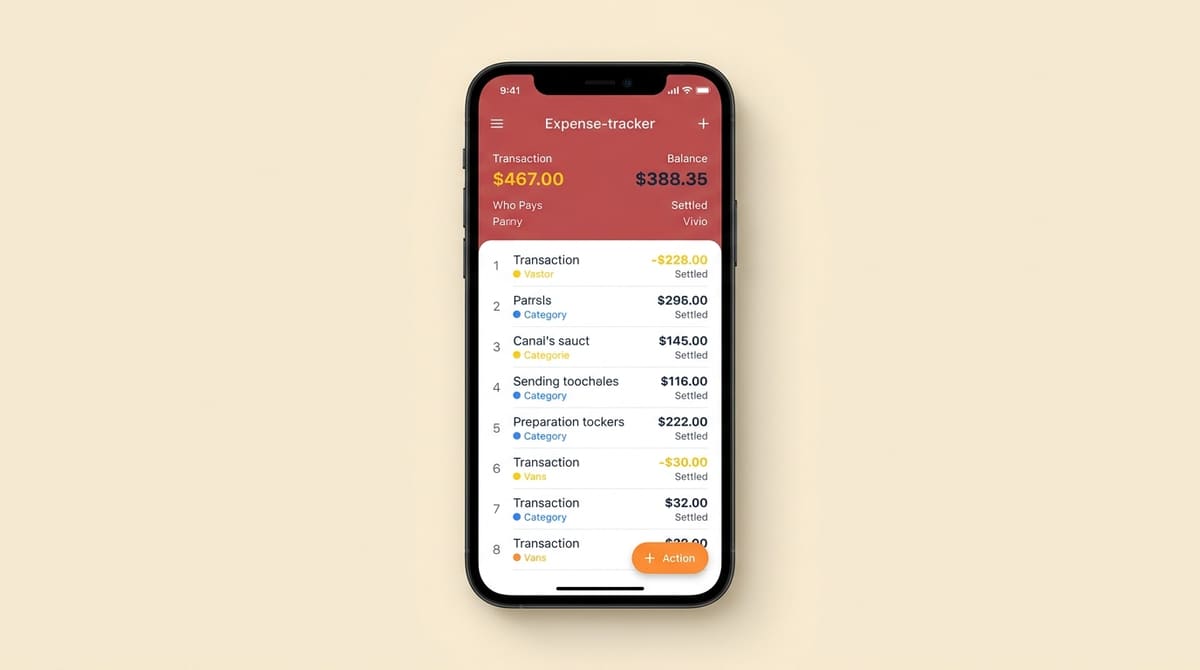
A few things reduce that friction:
Set it up before the trip, not during. Create the Trip Book, invite everyone, and get one test expense logged while people are still excited about the trip. Adoption during travel almost never happens.
Don't require everyone to log. Designate one or two people as loggers. Everyone else just needs to be able to see the Book. Viewing is a much lower bar than entering data, and visibility is where most of the trust comes from anyway.
Choose something that doesn't demand bank access. A lot of app resistance is really privacy resistance. People are reasonably wary of handing over bank credentials, UPI access, or OTPs to a trip app. Zedger never asks for any of that. You log what you spent, and sensitive data can be kept locally on your device rather than on a server.
Make sure it works offline. Nothing kills adoption like an app that won't open on a mountain road with no signal. Zedger's offline-first logging lets you add expenses without a connection and syncs when you're back online.
If some of your group already uses another tool, that's fine, though it's still worth checking whether it fits the trip you're actually taking, especially around several currencies and keeping trip money separate from other shared costs. Our comparison of the best app for splitting trip expenses walks through what to look for, and our guide to how to split travel expenses with friends shows how Trip Books handle it.
Putting It All Together
If you remember one thing, decide who pays first in group trip expenses before the first booking, not after. Collect upfront for the big items with a deadline that has teeth. Hand each category to a different person so no one carries the whole trip. Rotate the small daily stuff if that suits your group. Log it somewhere everyone can see, in whatever currency it was paid in. Settle at the end with as much or as little precision as your group actually needs.
None of that requires anyone to be the group accountant. It just requires agreeing on the rules while everyone's still in the planning-excitement phase, when money feels abstract and generosity comes easily.
The free tier covers four books, ten members, and six months of history, which handles a typical trip comfortably. For housing societies or organizations managing collections at a larger scale, contact sales about custom plans.
Tags: