How to Divide the Electricity Bill Between Roommates Fairly
How to divide the electricity bill between roommates: fixed vs variable charges, equal or usage-based splits, AC rules, travel absences, guests and seasonal spikes.

Arun Andiselvam

The electricity bill is the one shared expense nobody argues about until suddenly everybody does. Rent is fixed. The internet bill is the same every month. Electricity moves though. It climbs in summer, drops in the monsoon, spikes when someone's cousin stays for three weeks, and lands in the group chat as a number that feels unfair to at least one person in the house.
Here's the thing we've noticed again and again. Splitting bills with roommates strains relationships even when the math itself is simple, and the problem is rarely the arithmetic. It's the unspoken assumption that your way of using electricity is the normal way, and everyone else's is excessive. So figuring out how to divide electricity bill between roommates is less about building a perfect formula. It's more about agreeing on a system everyone can live with before the bill arrives.
This guide walks through equal splits, usage-based splits, bundling into rent, and bidding methods, along with the awkward situations most advice skips, including travel, long-term guests, summer absences, and what happens when one person just stops paying.
Start With the Two Parts of Every Electricity Bill
Before you pick a method, look at the bill itself. Almost every electricity bill has two components, fixed charges and variable charges.
Fixed charges are what you pay just for being connected. Meter rent, sanctioned load charges, fixed supply charges, and service fees appear whether you ran the AC for 200 hours or left the flat empty all month. Variable charges are the actual units consumed, usually billed in slabs that get more expensive as usage climbs.
This distinction solves more arguments than any app ever will. The fixed portion is a cost of having a home, not a cost of using electricity, so it should be split equally among everyone on the lease. Nobody gets a discount on the connection fee for being out of town. The variable portion is where any usage-based conversation belongs, if you want to have one at all. One more practical note: tariff slabs mean the household's last units cost more than its first units.
The Equal Split: Uncomplicated, Boring, and Usually Right
The default advice, divide the bill by the number of people, survives because it works. Three roommates, three equal shares. Four roommates, four. No tracking, no spreadsheets, no monthly negotiation.

A pattern worth noticing: households tend to land on utilities split equally per person while rent stays tied to rooms. If the bedrooms are roughly the same size, rent is also equal. If one room is bigger or has an attached bathroom, rent varies by room but utilities don't. This split-the-difference approach reflects something true about shared living: the fridge, lights, water pump, and fans serve the whole house, and none of that scales with bedroom square footage.
The equal split also has a social benefit that's easy to undervalue. It takes electricity off the table as a topic. Nobody monitors anybody, and nobody feels watched when they switch on a light. In a house where people already share a kitchen and a bathroom, removing one source of surveillance is worth a few hundred rupees of theoretical unfairness.
Where the equal split breaks down is when usage is genuinely, dramatically lopsided. Someone works from home running an AC eight hours a day while two others are in an office, or one roommate has a gaming rig and a second fridge in their room.
So the honest answer to how to split utility bills fairly is this: start equal, and only move away from it when there's a specific, obvious, agreed-upon imbalance. Don't build a complicated system to solve a problem you don't have yet.
Usage-Based Splits and the Comfort Problem
Usage-based splitting sounds like the fair way to split utilities. You pay for what you use. Install a sub-meter, estimate appliance hours, or weight shares by who runs AC and who doesn't.
In practice, it creates a problem most people don't anticipate. It turns comfort into a financial decision. When every hour of AC has a visible personal price tag, people stop using it. They sit in hot rooms in April and May, sweating, counting units, feeling slightly resentful of the roommate who doesn't mind the heat and therefore gets a cheaper bill.
We've watched this dynamic turn genuinely ugly. "You run the AC, you pay for it" is a reasonable-sounding rule that, in a hot Indian summer, quietly asks one person to choose between money and basic comfort.
If you do want usage-based splitting, make it coarse rather than precise. A simple tiered arrangement works well here. The roommate with the AC unit in their bedroom pays an agreed extra share each month during the hot months, and everything else splits equally. This captures the big imbalance without requiring anyone to track hours. Pick the number together, write it down, and don't revisit it monthly.
Avoid the trap of sub-metering individual rooms and billing to the rupee. The admin burden is real, the readings get disputed, and the savings rarely justify the friction. Among utility bill splitting methods, hyper-precise usage tracking is consistently the one households abandon first.
Say someone is genuinely using far more than everyone else, like they've moved a workstation and two monitors into the living room permanently. That's a conversation about household norms, not a billing problem. Talk about the behavior directly instead of engineering a formula to tax it.
Thermostat Rules That Prevent Half Your Arguments
Most electricity disputes in shared flats are really temperature disputes wearing a costume. One person is always cold. One person is always hot. The AC gets switched on, switched off, switched on again, and the bill climbs while nobody is actually comfortable.
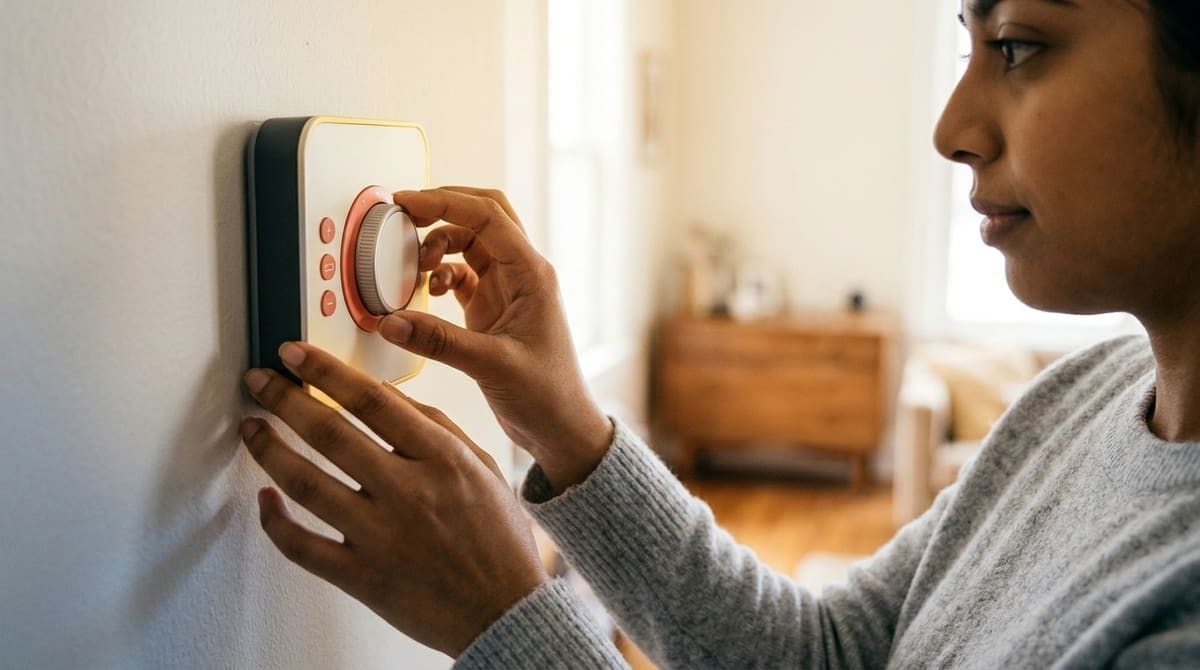
Agree on a fixed, reasonable setting and leave it there. Constantly turning the AC on and off is less energy-efficient than holding a steady temperature, because each cycle forces the unit to pull the room back down through a bigger temperature swing.
Practical rules that work in shared houses:
- Pick one setting for common areas and write it on a sticky note on the AC itself, so there's no debate at 11pm.
- Let people set whatever they want in their own bedrooms, with doors closed.
- Agree that the last person leaving a room turns things off, and that this applies to lights and fans too, not just AC.
- Keep fans running alongside AC at a higher temperature setting. Moving air makes a warmer room feel cooler for a fraction of the cost.
None of this is about being frugal for its own sake. It's about removing the daily micro-decisions that make roommates feel policed. When the setting is already agreed, nobody has to ask permission, and nobody has to play thermostat enforcer.
How to Split Electricity Bill With Roommates When Someone Travels
This is the gap almost nobody addresses properly, and it comes up constantly. A roommate goes home for three weeks. Someone takes a work trip. One person disappears for the entire summer. What do they owe?

People reasonably wonder whether it's fair to adjust utility splits based on time spent at home. The answer depends on which part of the bill you mean. Their room is still theirs, their stuff is still in it, and the meter rent doesn't drop because one bed is empty. This part isn't negotiable and should be stated plainly in your house agreement.
Variable charges are where you have room to be generous. Here's a workable approach. If someone is away for a substantial, continuous stretch, think weeks rather than a long weekend, they pay their equal share of fixed costs plus a reduced share of the variable portion. Agree on the reduction in advance as a flat proportion, not a calculation. Something like "half share of units for any full month away" is easy to apply and hard to argue with.
What doesn't work is ad hoc negotiation after the bill lands. The traveler feels they shouldn't pay for electricity they didn't use, while the people who stayed feel they shouldn't absorb someone else's share. Both positions are defensible, which is exactly why you decide the rule when nobody has a stake in the outcome.
What the Lease Says When a Roommate Leaves Mid-Term
There's real uncertainty about whether an absent roommate is legally obligated to contribute to utilities. The answer has less to do with fairness than with paperwork.
If everyone signed the lease, each person is typically jointly responsible for the rent to the landlord. Utilities are usually a distinct matter. The electricity connection is in one person's name, and that person is the one the utility company will chase. The roommate whose name is on the connection carries the real exposure, and every informal "I'll pay you back" arrangement sits on top of that.
That's worth sitting with. If you're the name on the bill, you're the one with the liability when someone stops paying. The household split is a private agreement between roommates, and the utility company doesn't care about it.
A few things that reduce the risk:
- Rotate whose name is on the connection when leases renew, or at minimum make sure everyone understands who's holding it.
- Collect utility contributions on a fixed date each month, before the due date, not after.
What we can say with confidence is that households with a written agreement handle these moments far better than households relying on goodwill.
Write It Down Before You Move In
Roommate agreements should exist on paper, agreed before anyone unpacks. This feels overly formal when you're moving in with friends, yet it feels genuinely sensible eight months later.

Your utilities section should cover:
- Which bills are shared and which are separate.
- How fixed versus variable charges are divided.
- The rule for extended absences, including what counts as "extended."
- What happens when someone's partner or long-term guest is effectively living in the flat.
- Who pays the bill, by when everyone owes them, and what happens if payment is late.
- How you'll handle a bill that's dramatically higher than usual.
That guest clause deserves attention. It comes up constantly. Someone's partner is around five or six nights a week, using the AC, the shower, and the washing machine. They're not on the lease and they're not paying anything. The person hosting them often genuinely doesn't notice the imbalance, because the cost is spread across everyone else.
Handle it with a simple rule rather than a confrontation. Something like this: anyone staying more than a set number of nights per month contributes a share of utilities. Agreeing on this before any specific person is involved makes it a policy, not an accusation, which is the entire point of writing things down in advance.
Seasonal Spikes, Bundled Rent, and the Bidding Method
Three alternatives are worth knowing about, because they solve problems the standard approaches don't.
Averaging across seasons. Electricity in most Indian cities isn't steady. It climbs hard from March through June, eases in the monsoon, and sits low in winter. If your household splits the actual bill each month, summer lands like a shock.
Instead, estimate the annual total, divide by twelve, and have everyone contribute that fixed amount monthly into a shared pot. Pay the real bill from the pot, and square up any surplus or shortfall at the end of the year. Budgeting gets easier for everyone, and the heat wave month stops being a crisis.
Bundling utilities into rent. Some households agree on an all-in monthly figure per person covering rent, electricity, water, and internet. One number, one transfer, no monthly reconciliation at all. The person collecting takes on the variance risk, so this works best when that person is the primary leaseholder and the group trusts the estimate. It's the simplest possible approach to dividing the utility bills that roommates face, and for groups that hate money conversations, the simplicity is worth more than precision.
Bidding on rooms. For the rent side, an online bidding calculator, where each roommate privately submits what they'd pay for each bedroom, produces a split that everyone has effectively agreed to in advance. Instead of arguing about whether the balcony is worth more than the extra closet, the market among three people settles it. Utilities usually stay equal per person on top of whatever rent the bidding produces. It's a genuinely useful tool when rooms differ meaningfully and nobody wants to be the one negotiating hardest.
Tracking It All Without a Spreadsheet War
Whatever method you pick, you still need a record. The most common complaint in shared living isn't that the split was wrong. It's that nobody remembers who paid what, and the person who covered last month's bill feels awkward asking a third time.
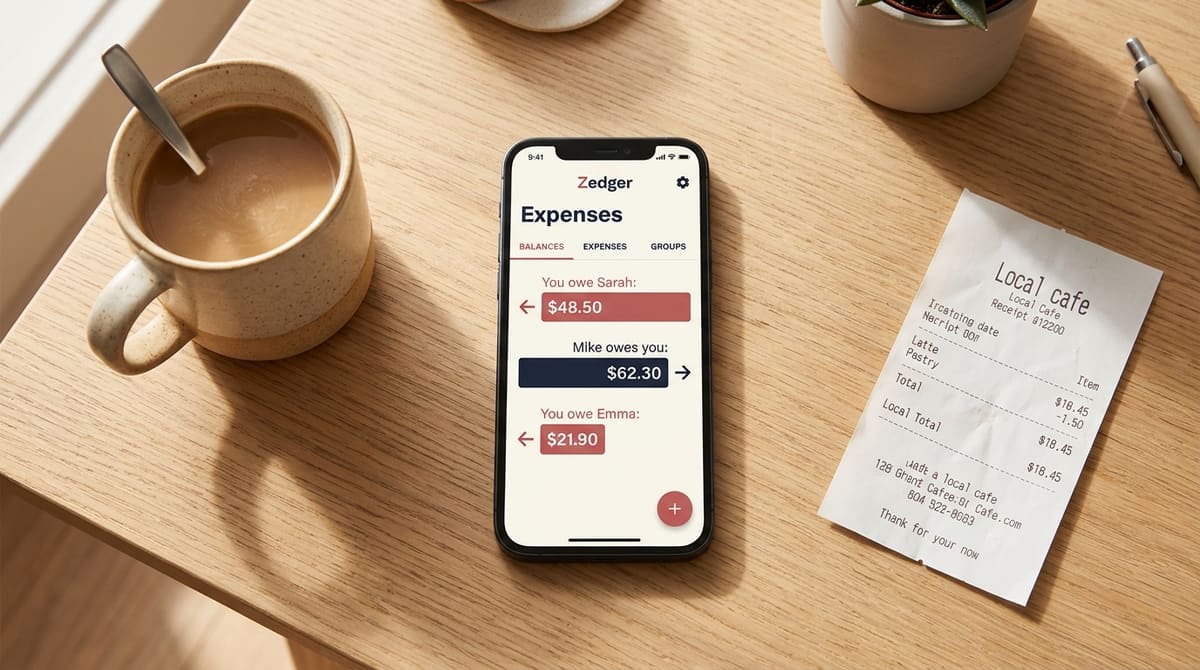
This is exactly what we built Zedger for. You create a Recurring Book for the flat, add your roommates, and log the electricity bill once a month. Everyone sees the same ledger, so there's no "I thought you paid that one." Regular entries mean you're not retyping the same bill every month, and Smart Settlements works out the simplest set of transfers instead of making five people pay five other people.
A few things matter for a shared-flat setup specifically. If you want the full picture of what shared-household tracking looks like, our guide to the bill splitting app for roommates walks through rent, utilities, and frequent bills together. For the wider picture beyond electricity, see our guide on how to split utility bills with roommates. If you're still choosing a tool, our comparison of the best bill splitting app for roommates covers the main options side by side.
Choosing the Method That Fits Your House
There's no universally correct answer to how to divide electricity bill between roommates, but there is a right answer for your specific household. Work through it in this order:
- Is usage roughly similar? Split everything equally. Done. Don't overthink it.
- Is one person's usage dramatically higher? Split fixed charges equally, and agree a modest flat surcharge for the heavy user during peak months. Not a calculation, a number you all picked.
- Does anyone travel for long stretches? Write the absence rule now: full share of fixed charges, reduced share of variable.
- Do bills swing wildly by season? Average across the year into a fixed monthly contribution.
- Does the group hate money conversations entirely? Bundle utilities into a single all-in monthly figure.
Across every one of these, the thing that actually prevents conflict isn't the formula. It's that the rule existed before the bill did. Households that decide in advance handle a shocking summer bill as a budgeting problem, while households that decide afterward handle it as a fight about character.
The fair way to split utilities is the one everyone understood and agreed to when nobody had anything to gain from the outcome. Pick a method from this list, write it into a shared note or your roommate agreement, and revisit it once a year rather than once a month. Splitting electricity costs in a shared apartment should take about ten minutes of setup and then disappear from your attention entirely.
That's the test for any of these utility bill splitting methods. Does it make the money invisible again? If you're still thinking about the electricity bill a week after paying it, the system isn't working, and it's worth changing before it changes how you feel about the people you live with.
Ready to stop chasing roommates for money? Set up a Recurring Book for your flat in under five minutes.
GET IT ON Google Play · Download on the App Store
Managing utilities for a housing society or a larger building? Contact Sales about custom plans.
Tags: