How to Reimburse Someone After a Group Trip, Fairly
How to reimburse someone after a group trip fairly: collect every expense, net the balances, pick a payback method, and handle cancellations and non-payers.

Arun Andiselvam

You're home, the laundry is half done, and there's a group chat full of receipts nobody wants to open. Somebody paid for the villa. Somebody else covered three dinners and a rental car. Everyone agrees it should even out, but nobody has actually done the math.
Here's the short answer on how to reimburse someone after a group trip. Gather every shared expense in one place, agree on what counts as shared versus personal, and calculate each person's fair share. Subtract what they already paid, then send the net difference in one payment per person. Do it within a few days of getting home, while the trip still feels good and everyone remembers what the dinners cost.
The Five-Step Method to Settle Travel Expenses With Friends
Start with a single list. One person, ideally whoever fronted the most money, collects every shared cost into one shared record, not a chat thread and not three people's camera rolls. One list that everyone can see.

Each line needs four things. What it was, how much it cost, who paid, and who it was for. That last one is where most groups go wrong. If two people skipped the boat tour, the boat tour isn't a five-way split. Write it down at the time, or you'll be relitigating it from memory a week later.
Next, separate shared from personal. Groceries for the house, the rental car, and the shared apartment count as shared. The souvenir sweater or the massage one person booked alone counts as personal.
Then calculate who owes who after travel by totaling the shared pot and dividing it according to whatever rule the group agreed on. Equal splits work for most trips. Unequal splits make sense when someone took the master bedroom or stayed two extra nights. Percentage splits work when incomes are wildly different and the group has openly agreed to that.
Fourth, net it out. If Priya owes Marcus $180 and Marcus owes Priya $95, nobody sends two payments. Priya sends $85 and it's done. Netting is the single biggest reason group settlements stall. Without it, a six-person trip can generate fifteen separate transfers, and every one of them is a chance for someone to forget.
Finally, set a deadline and say it out loud. For a longer walkthrough of the whole process, see our guide on how to settle up after a trip.
How to Split Trip Costs After the Fact When Nobody Tracked Anything
Sometimes you get home and realize nobody kept a record. This is recoverable, but you have to move fast, because memory for restaurant totals decays quickly.
Pull your card statements and bank app history for the trip dates. Everyone does this at once, ideally in the same hour, and dumps their line items into the shared list.
Then reconstruct the days. Walk through the trip chronologically out loud in the group chat: day one you landed, took the train, checked in, ate at that place with the bad lighting. People remember spending in sequence far better than they remember it in isolation. You'll recover expenses this way that no statement caught, like the cash someone handed over for the parking meter.
For small cash amounts that nobody can pin down, don't burn an evening on them. Chasing an unrecoverable $14 costs more goodwill than it's worth. Figuring out how to split trip costs after the fact is always an exercise in good-enough accuracy, not forensic accounting.
One rule worth setting before you start the reconstruction: whatever the list says at the end of the process is final. Don't reopen it when someone remembers a taxi three days later. Draw the line, announce it, and let the number stand.
The Best Way to Pay Back Trip Money Once You Have the Number
Once you know who owes what, the mechanics should be boring. One transfer per person, sent the same day the number lands.
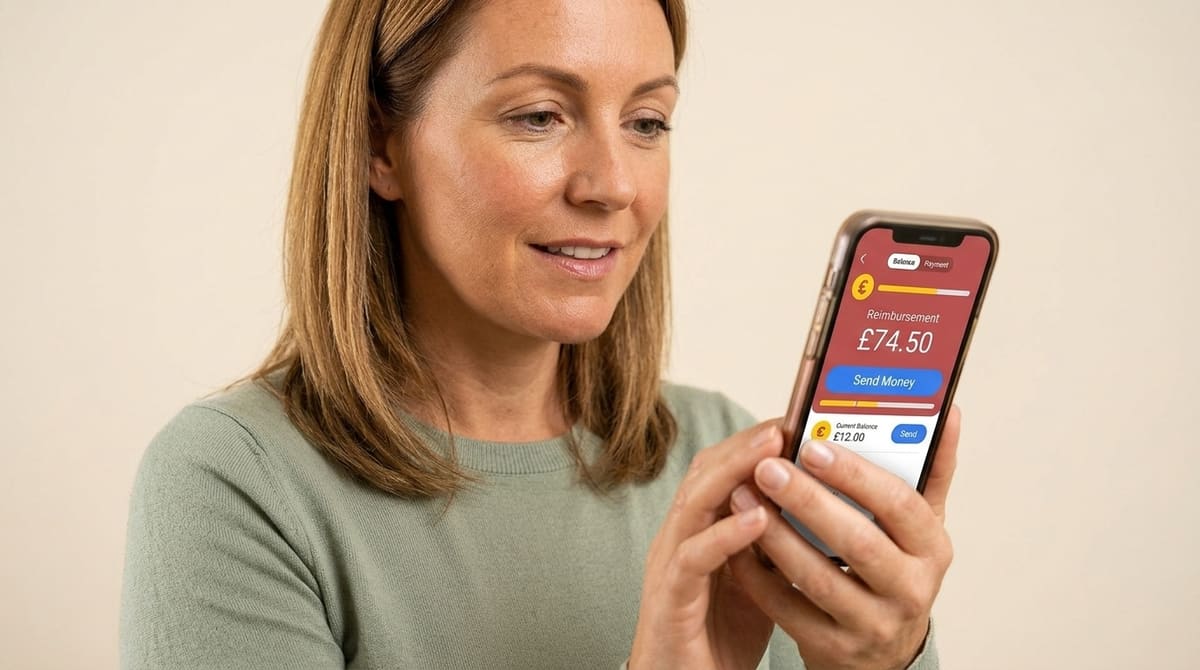
The best way to pay back trip money is almost always the method your friends already have open on their phone, not the one with the lowest fee or the cleverest features. Friction kills settlements. If someone has to download something new to pay you, they won't do it today, and today is the only day that reliably works.
Include a note with every payment. "Lisbon trip, final settlement" takes four seconds and saves a confused message in six weeks when someone is reviewing their statement. If you're the person receiving, confirm each one as it arrives so the sender knows it landed.
A word on the record itself: the calculation and the payment don't have to live in the same place, and honestly, they shouldn't. Zedger tracks the shared expenses and tells you the net amount each person owes. Then you send that money however you normally send money.
Trip Expense Settlement Methods: Which One Fits Your Group
There's more than one way to handle money on a trip. The right choice depends on group size and how well everyone knows each other.
One person fronts everything. Simple during the trip, brutal after. The person who paid carries the entire financial burden and then becomes the collections department, sending reminder after reminder. If you're going to do it, collect money before the trip, not after.
A shared kitty. Everyone contributes a fixed amount up front into one pot, one person spends from it, and the remainder gets divided at the end. This works beautifully for trips where most spending is communal, like road trips, group houses, or festivals. It also removes the awkwardness entirely, because nobody is owed anything.
Alternating daily payment duty. Person A covers everything on Monday, person B on Tuesday, and so on. By the end of a week-long trip with four people, the totals are usually close enough that only small adjustments are needed. It spreads the cash flow burden, it's simple to remember, and it produces a much shorter expense list than itemizing every coffee. The catch is uneven days. If Tuesday included the boat charter and Wednesday was sandwiches, you still need to true up at the end.
Pay-as-you-go with a running tab. Everyone pays for what they happen to pay for, logged as it happens, settled at the end. This is the most common approach and the most flexible, and it's the one that makes a shared ledger genuinely necessary. Trying to hold a hundred line items in a group chat is how trips end in resentment.
Most groups end up mixing these.
Reimbursing Travel Expenses: Group Size Changes Everything
A four-person trip and a twelve-person trip are different animals. Treating them the same is where organizers get crushed.

With four or five people, informality works. You can settle over dinner, you all have each other's numbers, and social pressure alone is usually enough to get everyone paid. Reimbursing travel expenses in a group this size is mostly a bookkeeping task.
Past about eight people, it becomes a logistics job. Payments arrive in dribs and drabs, and the math isn't harder, just the follow-up. Managing a group this size means you need structure before departure, not goodwill after it.
For larger groups, do these things:
- Split into sub-groups where it makes sense. Room-sharers settle room costs among themselves. The people who did the diving trip settle the diving trip. The organizer handles only the genuinely group-wide costs.
- Post the running total somewhere visible. When people can see the ledger updating, fewer of them ask what they owe, and nobody is surprised at the end.
A Trip Book for the main group, with its own members and its own history, keeps the Lisbon reckoning from blurring into the apartment utilities or the ongoing family spending. One generic list for everything is how clarity dies.
How to Reimburse Someone After a Group Trip When Someone Cancels Last Minute
This is the fairness question that splits groups down the middle. There isn't a universally correct answer, only a correct process.
The principle: non-refundable money that's already spent is a sunk cost, and the person who caused it should generally absorb it. If someone cancels two weeks out and the villa deposit is gone, the group shouldn't quietly eat that. If the cancellation frees up money, like a refundable flight or an unbooked tour, that money goes back to whoever paid it.
The part that causes arguments is the in-between. The house costs the same whether seven or eight people stay in it, so the remaining travelers now each pay more. Whether the canceler is responsible for the difference is a question the cancellation policy should answer. That policy belongs in the planning chat on day one, alongside the dates and the budget.
Then there's the human layer. A cancellation for a medical emergency or a family crisis is not the same as a cancellation because something better came up, and most groups instinctively treat them differently. That instinct is fine. Just make it an explicit group decision rather than something the organizer absorbs silently. If the group wants to cover a friend who's going through something, let the group vote on it and share the cost. The organizer shouldn't be the one who quietly pays for everyone's generosity.
Write the policy down. "Once bookings are made, your share is committed" is one sentence. It prevents the entire argument.
What to Do When Someone Ghosts After a Group Trip
It happens more than anyone admits. One person covered the hotel and the group activities, the payment requests went out, and after a while the responses just stopped. The pattern is predictable enough to set your watch by: a reply or two, then slower replies, then nothing, while the person stays visibly active everywhere else.

Here's a sequence that keeps you sane and keeps your dignity intact.
First, send one clear, friendly message with the exact number and a date. Not "when you get a chance." A specific amount and a specific day. Vagueness gives an avoider somewhere to hide.
Second, follow up once, a week later, same tone. Still warm, still specific. People genuinely do forget, and two polite messages is not nagging, it's normal adult behavior.
Third, change the channel. If messages aren't landing, call. A voice call is much harder to ignore and often shakes loose an honest answer, which is sometimes "I don't have it right now."
Fourth, offer a payment plan. If money is genuinely tight, splitting the debt into a few smaller amounts over a couple of months recovers far more than holding firm on a lump sum.
Fifth, stop chasing and change the relationship. After a reasonable number of attempts across a reasonable stretch of time, more messages won't produce money. They'll just produce more of your attention spent on someone who isn't spending any on you. Stop fronting money for that person.
When a Mutual Friend Vouches for a Non-Payer
This situation has its own particular sting. You're owed money, the person isn't responding, and a mutual friend steps in to say they're good for it, or that you should give them more time, or that you're being intense about it.
Treat vouching as a specific offer. A vouch that means "I'll cover it if they don't" is genuinely useful. Accept it, get a date, and take the person at their word. A vouch that means "trust me, back off" is not valuable, and you're allowed to say so.
What makes this easier is having a record that isn't a he-said-she-said. When there's a shared ledger showing exactly what was spent, who it was for, and what each person's share came to, the conversation stops being about character and becomes about a number. Nobody can argue with a line item they watched get added during the trip.
If the mutual friend does cover the debt, settle it with them directly and leave the original debtor out of it.
When Unpaid Trip Debt Is Worth Escalating
Most trip debts are too small for formal action, and that's the honest starting point. But not all of them, and it's worth knowing where the line sits.
Small claims court exists for exactly this kind of dispute. Modest amounts, no lawyer required, simplified procedure. Limits vary by state in the US and by jurisdiction elsewhere, so check yours before you plan around it.
Documentation is the deciding factor. A judge needs to see that money was spent, that it was spent on that person's behalf, and that they agreed to repay it.
Before filing, send one final written message. State the amount, what it was for, and that you intend to pursue it formally if it isn't paid by a specific date.
Be straightforward-eyed about the cost. For a significant amount from someone who has stopped being a friend, it's a legitimate option and there's no shame in using it.
Small Courtesies That Prevent Big Arguments
A few things that come up constantly and rarely get written down anywhere.

Tipping on "free" activities. Free walking tours aren't free, the guide works for tips, and that's the whole business model. Decide as a group before the tour whether you're each tipping individually or whether one person covers the group and gets reimbursed. Pay what the experience was worth to you, and be generous if the guide was good. The same logic applies to any pay-what-you-want activity. Agree on the approach beforehand, not while standing awkwardly in a circle after.
Rounding. Round to whole units in the local currency and stop agonizing over small change.
Exchange rates. Pick one rate for the whole trip, agree on it at the start, and apply it consistently.
Who logs what. Everyone logs their own spending as they go. When one person logs everything, they become the bottleneck and the blame magnet. A shared book that works offline matters here. You'll spend parts of the trip without signal, and expenses you don't log in the moment are expenses you reconstruct badly later.
The settlement itself. When it's time to square up, one-tap settlement suggestions do the netting for you, so a group of eight doesn't turn into twenty-eight payments. Our travel expense splitter handles this with Smart Settlements, flexible splitting (equal, percentage, unequal, or excluding specific members), and offline logging that syncs when you're back on Wi-Fi. If you're still choosing a tool, see our comparison of the best app for splitting trip expenses.
Settle Up Before the Trip Fades
The single highest-leverage habit in all of this is collecting money before the experience, not after. Once the trip has happened and everyone's home, the organizer has lost all practical leverage. The memories are banked, and the urgency is gone. Everything from that point is a favor you're asking.
So front-load it: big bookings paid up front with a hard deadline, one organizer with real authority, a written cancellation policy, and a shared ledger everyone can see from day one. Then the post-trip part becomes what it should be, a number, a few transfers, and a group chat that goes back to being about photos.
When you do need to settle travel expenses with friends after the fact, move quickly, net everything down to one payment per person, and be specific about amounts and dates. Those two things resolve the vast majority of group trip money without anyone feeling chased.
No bank linking. No UPI access. No OTPs. Just a shared record everyone trusts.
Get It on Google Play · Download on the App Store · Start a 7-day free trial of Pro, or contact sales if you're organizing for a large group or organization.
Tags: