How to Split Airbnb Costs Among Roommates on a Trip Fairly
How to split Airbnb costs among roommates on a trip fairly: by person or by room, pricing the pullout couch, kids, uneven stays, cancellations and tracking it all.

Arun Andiselvam

By the end of this article, you'll have a method you can use. A way to decide what each person owes for the rental, a script for the awkward conversations, and a system for tracking it all so nobody is chasing anyone for money three weeks after you get home. We'll walk through the splitting formulas step by step, and we'll cover the edge cases that ruin trips, like pullout couches, early departures, kids, and a friend who books nothing but expects a discount. We'll also show you where a shared record keeps everyone honest without anyone having to play accountant.
Here's the thing most advice skips. The money itself is rarely the problem. The problem is that one person quietly feels they got a bad deal and never says so. Figuring out how to split Airbnb costs among roommates on a trip is really about making the math visible early, while everyone is still excited about the trip and nobody has anything to defend.
Step 1: Decide Your Splitting Method Before You Book, Not After
The single biggest mistake groups make is booking first and discussing money second. Once the reservation is confirmed and someone's card has been charged, every conversation about fairness feels like a complaint about a decision that's already been made. Nobody wants to be the person who says "actually, I think I should pay less" after a friend has fronted two thousand dollars.
There are four splitting methods worth knowing, and most groups will land on one of them:
- Equal split. Total cost divided by the number of people. Simple, fast, and fine when everyone gets roughly the same sleeping situation.
- By room. Each bedroom pays a share, and the people in that bedroom divide it among themselves. This is the standard approach to splitting Airbnb costs fairly when the rooms are visibly unequal.
- Weighted by room value. The primary suite with the en-suite bathroom pays more than the small room facing the parking lot. You assign rough weights to each room before anyone claims one.
- Per person-night. Each person pays for the nights they're actually there. Useful when people arrive and leave on different days, though it has a flaw we'll get to.
Common mistake to avoid: assuming everyone defaults to "equal" because nobody objected. Silence in a group chat is not agreement. It's usually someone waiting to see if anyone else speaks first.
Step 2: Work Out Whether to Split by Person or by Room
This is where most groups get stuck. The honest answer is that it depends on who's in the group and what the house looks like.

Splitting by person works well when the group is made up of similar units. Six friends, all single, all getting a bed of roughly the same quality, nobody getting more house than anyone else. Dividing the bill by six is both simple and genuinely fair in that situation.
Splitting Airbnb by room size makes more sense the moment the sleeping arrangements stop matching. A four-bedroom house rented by two couples, one family of four, and one solo friend is not a six-way or even a three-way split in any meaningful sense. The family is occupying two bedrooms. The couple has a private room with a door. The solo friend is on the pullout in the living room, awake whenever anyone makes coffee.
A valuable way to think about the relationship factor: the closer the group is to being equal units of people with equal privacy, the better a per-person split holds up. The more the group splits into households, families, couples, singles, the more you want to price the space itself rather than the headcount.
Consider a quick example: a $2,800 week-long rental split six ways evenly comes to about $467 per person, but the same house split by room, with the solo friend on the pullout priced at half a share, puts that same person closer to $255.
Nobody is being malicious. The formula just does the work quietly.
Common mistake to avoid: choosing the method after everyone knows which room they're in. People argue for whichever formula helps them once they can see their own number.
Step 3: Price the Pullout Couch and Other Non-Private Beds Honestly
Pullout couches, air mattresses, and loft nooks are where resentment is born. A single adult sleeping in a shared living space while paying the same as someone with a private bedroom and an en-suite bathroom is the most common unfair outcome in group rentals. It's almost always an accident of the formula rather than a decision anyone made out loud.

A sleeper sofa in a separate den with a door is closer to a real room. A mattress in the open-plan living room, next to the front door and the kitchen, is not.
What matters more than the exact fraction is that the person sleeping there doesn't have to ask for the discount. Build it into the plan yourself, as the organizer, and present it as the default. Something like: "Dan's on the pullout, so he's at half a room share, and the rest of us cover the difference across the bedrooms." Ten seconds, no negotiation, nobody has to advocate for themselves.
The same logic applies to bunk rooms, shared kids' rooms with three beds crammed in, and anyone sleeping in a space that doubles as the morning gathering spot. Privacy and quiet are part of what you're renting. A fair way to split Airbnb with friends prices those things in, even roughly.
Common mistake to avoid: offering the couch sleeper a vague "we'll sort you out" instead of a number. Vague promises get forgotten, and the person who was supposed to be sorted out ends up paying full freight.
Step 4: Build a Weighted Formula When Kids Are in the Group
Children complicate the math in a way most groups handle badly, usually by pretending it's easy.
In practice, many groups settle on something like this. Adults count as one, teenagers count as one, younger kids count as a half, and babies don't count at all for food and activity costs. Write it down in the group chat. The specific weights matter less than the fact that everyone agreed to them before the first grocery run.
Where this goes wrong is when larger families push for an equal split by household, three families, three equal shares, regardless of how multiple rooms each one takes. That structure consistently disadvantages single travelers and couples, and it comes up often enough in group trips that it's worth naming in advance. If one household is taking two bedrooms and the other households are taking one each, a three-way split isn't a compromise. It's just the biggest group paying less per bed.
Common mistake to avoid: letting "we're all family here" stand in for a formula. The vaguer the arrangement, the more it tends to favor whoever talks the most.
Step 5: Handle Different Arrival and Departure Dates Without Penalizing Anyone
Here's a scenario that comes up constantly. The rental is booked for five nights, four people are there all five, and two people can only make the last three. How do you split it?
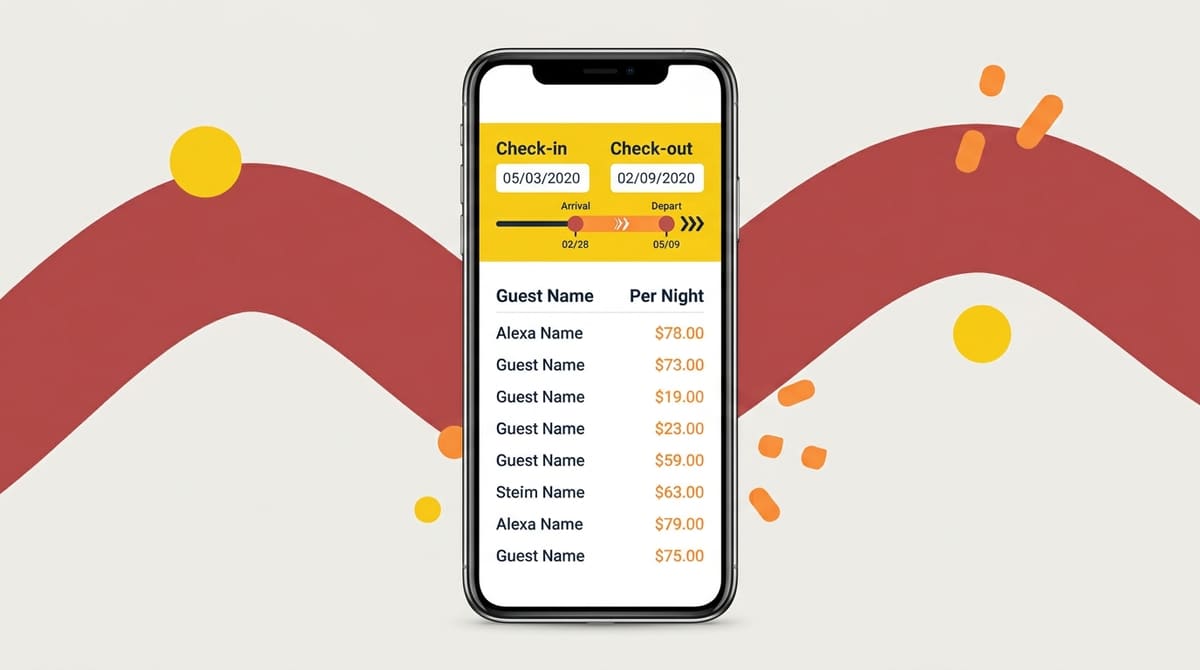
The intuitive answer, divide by total person-nights, sounds fair and isn't. Person-nights charge everyone the same rate regardless of whether they were sharing the house with five other people or had it nearly to themselves.
The cleaner method starts with the nightly rate for the whole property. For any night when only part of the group is present, the people there that night split that night's cost among themselves. For nights when everyone is present, split that night's cost evenly across everyone. Add up each person's nightly obligations and you have the answer.
This is the approach we'd recommend for any group where arrival dates vary. It's worth working out in a spreadsheet or in your shared book before anyone transfers money.
Common mistake to avoid: charging latecomers a flat "share" of the whole booking because "the house was reserved for them anyway." If you wanted a five-night house for four people, that's a four-person decision for those nights.
Step 6: Decide What Happens If Someone Cancels or Leaves Early
Nobody plans for this, but it happens often enough that it deserves a rule in advance. A job emergency, a sick kid, a breakup two weeks out, and suddenly the booking is short one payer.
Agree on the rule before it's needed. Deciding afterward means deciding about a specific person while they're already upset. Three fair options:
The booking is non-refundable, so the share stands. If the group committed and the money is gone either way, the person who drops out still owes their share. Harsh, but defensible, and many hosts price their cancellation policies this way by default.
The group absorbs it. Everyone pays slightly more and nobody gets hunted down. This works for small, close groups and for small amounts.
Replacement rule. The person who drops out has until a set date to find someone to take their spot. If they do, they're off the hook. If they don't, their share stands. This is the most common compromise and it's the one we'd suggest writing into the group chat on day one.
Leaving early is a separate question. If someone departs two nights before checkout, they've already consumed their portion of a booking that can't be resold. In most cases their full share stands, since the house was rented for the whole period on their behalf. But if a replacement takes over their room, or if the group genuinely wanted the extra space, adjust. The principle to state up front: departure doesn't automatically create a refund, because the cost was locked in at booking.
Common mistake to avoid: letting the organizer silently eat the gap. The person who did the work of booking should never also be the person who absorbs the loss by default.
Step 7: Settle the Question of Whether Organizers Get a Discount
Somebody has to research listings, compare cancellation policies, front a deposit on their own card, coordinate check-in codes, and answer forty messages about parking. That's real work, and it's uncompensated in most groups.
Our honest take: organizers shouldn't get a cash discount on the rental, but they should be relieved of other duties. The clean trade is labor for labor. If you booked the house, you don't cook, you don't drive, and you don't do the grocery run. Someone else picks up those jobs. This keeps the money math clean while acknowledging that the organizer did more than everyone else.
Step 8: Push Back on Pressure Without Blowing Up the Group Chat
Sometimes the group lands on a formula that isn't fair to you, and the pressure to just go along with it is enormous. Nobody wants to be the friend who argues about money.

A few things make this easier. Raise it early and frame it as a question about the system, not about a person. Try something like: "Before we lock this in, should we do rooms or people? Asking because the sleeping setups are pretty different." That's not a complaint, it's logistics.
Bring a number too. "Equal split puts me at $500 for the sofa bed, and the room split puts me at $333. Can we do rooms?" Numbers are much harder to dismiss than feelings, and they let the group see the gap instead of arguing about whether it exists.
Give yourself an exit as well. If a group insists on a split you genuinely think is unfair, you're allowed to book your own place nearby. This isn't a dramatic move.
If you're the one with the most leverage in the group, the bigger family, the person booking, use it the other way. Propose the split that's generous to the people with the worst sleeping arrangements. It costs each of you a little, and it buys a trip where nobody is keeping score.
Common mistake to avoid: agreeing to something you resent and then letting it leak out sideways as irritation about dishes, noise, or who's driving.
Step 9: Track Everything in One Shared Place From Day One
The rental is one line item. The trip is fifty. Groceries, gas, the boat rental, the restaurant where one person covered the whole table, the cleaning supplies someone bought on arrival. Even a group that nailed the room split can end up tangled by day three, because knowing how to split rent on a group trip doesn't help if nobody wrote down who paid for dinner.
This is where a shared record earns its keep. In Zedger, you'd create a Trip Book for the trip, add everyone to it, and log expenses as they happen, including the rental itself, split however you agreed. Because Zedger supports equal, percentage, unequal, and exclude-member splits, you can enter the Airbnb with your weighted room shares and still split the grocery run evenly among the adults who ate. The same book handles both without you keeping two sets of math.
A few things make this work well in practice on a trip. Logging works offline, which matters when you're in a rental with patchy wifi or abroad without data, and entries sync once you're connected again. Zedger never asks for bank credentials, UPI access, or OTPs, so nobody in the group has to weigh whether they trust a travel app with their account login. Sensitive data can be stored locally on your device rather than only on a server, if that's your preference.
At the end, Smart Settlements works out the shortest set of payments that clears everyone's balance. So instead of everyone transferring money to everyone else, a handful of payments closes out the whole trip. Nobody has to send reminders. The number is just there, agreed, in a place everyone can see. Here's our full breakdown of what to look for in a group trip expense splitting app if you want to compare options before you commit. You can also see how to split travel expenses with friends using Trip Books.
Common mistake to avoid: keeping receipts in your camera roll and promising to sort it out on the drive home. That conversation never happens.
Step 10: Reconcile Before You Leave the House
Do the final settlement on the last morning, while you're all still together and still in a good mood. Pull up the book, read out what each person owes, and let people pay on the spot.

This matters more than it sounds. Once everyone scatters, the group chat goes quiet, people get back to work, and the person owed money has to decide between chasing friends or eating the difference. Most people eat the difference and remember it. Settling in the living room, before the bags go in the car, skips all of that.
A quick checklist for the last morning: confirm the rental split matched what you agreed at booking, add any last expenses nobody logged, check that the security deposit refund is accounted for if it's been returned, and note anything still pending so it doesn't get forgotten.
If you've used a shared book all week, this takes about five minutes. If you haven't, it takes an hour, and somebody will be wrong about dinner on Tuesday. For the full process, see our guide on how to settle up after a trip.
Putting It All Together
Dividing vacation rental expenses well isn't complicated math. It's just math done early, out loud, and written down. Pick your method before booking. Price non-private beds below private ones. Weight kids sensibly. Charge per night when arrival dates differ. Agree in advance what happens if someone drops out. Trade organizer labor rather than discounting their share. And keep one shared record from the first grocery run to the last morning.
Get It on Google Play · Download on the App Store
Organizing something larger, like a housing society trip or a company retreat? Contact Sales.
Tags: