Calculating Trip Expenses Per Person Spreadsheet: Free Template
A free trip expense spreadsheet template for calculating trip expenses per person: columns, formulas, weighted splits, travel days, and where a sheet breaks down.

Arun Andiselvam

Six people, one beach house, four rental cars' worth of gas, and a group chat that slowly turns into a debt collection agency. If you've organized a trip, you know the pattern. Somebody fronts the deposit. Somebody else covers dinner twice, and three weeks after everyone gets home, there's still a vague sense that the math never quite landed.
This guide fixes that. We'll walk through calculating trip expenses per person spreadsheet, covering the exact columns, the exact formulas, and the decisions most people get wrong. Then we'll show you how to skip the manual work entirely if you'd rather not babysit a sheet while you're on vacation. The spreadsheet layout below is free.
The Short Answer: How Per-Person Trip Math Actually Works
Here's the whole calculation in one line. Add up every shared cost, subtract anything that only one person used, divide the rest by the number of people sharing it, then compare each person's share against what they actually paid.
That last step is the one people skip. Most groups stop at "the trip cost $3,000 and there are six of us, so it's $500 each." But the useful number isn't the share, it's the balance. Someone who paid $1,200 and owes $500 is up $700. Someone who paid nothing owes their full $500. The per-person trip math's real job is producing that second column.
So the structure you want is this:
- Total shared cost ÷ number of sharers = each person's share
- What they paid − their share = their balance
- Positive balance means the group owes them. Negative means they owe the group.
Everything else, weighted splits for families or excluding the person who skipped the scuba trip, is a variation on those two lines. Once you understand them, you can build a split trip expenses spreadsheet in about ten minutes. You'll also spot when a group travel expense calculator online is doing something you didn't intend.
One honest note before we build it. A spreadsheet is a record, not a system. It tells you who owes what. It doesn't collect the money, remind anyone, or stop one person from carrying the whole trip on their credit card. We'll deal with that problem too, because it's the one that actually ruins friendships. For the formula without the spreadsheet, see our guide on how to calculate trip cost per person.
The Free Trip Expense Spreadsheet Template: Build It in Ten Minutes
Open Google Sheets or Excel. You need three tabs. Here's the free trip expense spreadsheet template, laid out so you can type it in directly.

Tab 1, People. Column A holds names. That's it.
Tab 2, Expenses. This is the engine. Columns:
| Date | Description | Category | Amount | Currency | Amount (home currency) | Paid by | Split between | Notes |
|---|
Keep "Category" to a short list so you can total it later: Flights, Lodging, Ground Transport, Food, Activities, Other. "Split between" is a comma-separated list of names, or the word "All" when everyone's in. "Notes" is where you write why, something like "Maya skipped the boat tour," because in three weeks nobody will remember.
Tab 3, Settlement. One row per person, with four columns: Paid, Share, Balance, and Settles With. Paid is a SUMIF across the Expenses tab matching their name in "Paid by." Share is the sum of each expense they were included in, divided by the number of people in that split.
Balance is Paid minus Share. That third tab is where a trip cost splitter template earns its keep. Ugly, but it never lies, and summing each person's column gives you their total share instantly.
Add a conditional format on the Balance column, green for positive, red for negative, and you have a working shared trip expense tracker your whole group can read at a glance.
Weighted Splits: When "Divide by Six" Isn't Fair
Equal splits assume everyone consumes equally. On a lot of trips, they don't, and this is where resentment starts.
The clearest example is a mixed group of singles and families. A family of four takes the master bedroom. One friend sleeps on the pull-out couch. Charging that family 4x what the solo traveler pays feels punitive to them, while charging them 1x feels absurd to everyone else. The fix is a weighted formula that counts adults fully, counts children at a reduced factor, and accounts for how many rooms each party occupies.
Build it into the People tab. Weight column: adults get 1.0, children get a reduced figure the group agrees on before anyone books, and you add a room-count adjustment for lodging specifically. Then lodging gets split by weight rather than headcount:
Person's lodging share = (their weight ÷ sum of all weights) × total lodging cost
Food can use the same weights. Flights almost never should, since everybody buys their own seat.
The single most important part of this isn't the formula. It's agreeing on the weights in the group chat, before deposits go out. A weighted split that everyone signed off on in advance is fair. The identical weighted split announced after the trip is an argument. When you divide vacation costs among friends with different family sizes, the conversation is the product. The spreadsheet just records what you decided.
How to Split Travel Expenses Evenly Without One Person Fronting Everything
Now the real problem. Most trip spreadsheets are built to solve a math question. But the thing that actually sours group travel is a logistics question: one person's card is on everything.

When one traveler fronts the lodging deposit, the rental car hold, and the group dinner, they've effectively given the group an interest-free loan. They've also hired themselves as the collections department. They send the first reminder feeling slightly awkward, then send the second feeling resentful. By the third, they're deciding whether the money is worth the friendship.
The strongest fix is structural: split the trip by component, not by receipt. Before anyone books, divide the big-ticket items among the group. One person books and pays for the accommodation. Another buys the rental car or train tickets. A third pre-pays the tour or the concert tickets. A fourth takes on groceries and the first two group dinners.
Now everyone has real money in the trip from day one. Nobody is the bank, and nobody is owed four figures. The balances at the end are small enough that settling takes one transfer instead of five.
Component splitting doesn't have to be perfect to work. The lodging booker will usually have fronted more than the groceries person, and your spreadsheet catches that gap at the end. What it changes is the distribution of risk and stress. What groups actually need is shared financial accountability upfront, not one person absorbing everything and then doing the emotional labor of asking for it back. That principle matters more than any formula in this article.
The Daily Rotation System for Two Travelers
If you're traveling as a pair, there's a much lighter method than logging every purchase, and it's worth knowing before you build anything elaborate.
Alternate days. On Monday, you pay for everything: breakfast, train tickets, museum entry, dinner. On Tuesday, your travel partner pays for everything. You keep rotating. At the end of each day, or every few days if you'd rather not do it nightly, you compare the day's totals and settle the difference with a single transfer.
Why does this work so well? It removes dozens of micro-decisions. It also self-corrects over the course of the trip.
For a pair using this system, your split trip expenses spreadsheet shrinks to one row per day: date, who paid, total spent, running difference. That's a sixty-second entry each evening. If you want the method but not the nightly admin, this is exactly the kind of thing a shared trip expense tracker handles in the background, logging the day's total once so the balance updates itself.
The rotation falls apart past three or four people, because the day-to-day amounts stop evening out. For bigger groups, go back to component splitting.
Should You Budget Before the Trip or Track As You Go?
Both, and they're genuinely different jobs.
Budgeting before answers whether you can afford this, and whether you're all picturing the same trip.
Tracking during answers who owes what, and whether you're on pace. It's a record-keeping job, and it's the one that saves friendships at the end.
If you only have energy for one, track during.
The practical approach is to use the same file for both. Add a Budget column next to Actual on your category totals, so your group travel expense calculator does double duty. Before you leave, it's a planning estimate. While you're away, the Actual column fills in and the variance tells you whether to rein in restaurant spending for the last two days.
One warning about pre-trip budgets: they're almost always optimistic, because people estimate from their home spending habits. You eat out more on vacation, you take taxis you'd normally walk, and you buy the overpriced thing at the airport. Build that in rather than pretending you won't. Here's how to put real numbers behind that estimate instead of guessing.
How to Research Baseline Costs Before You Book
A budget invented from vibes is useless. A budget built from actual numbers for your actual destination is surprisingly accurate. Here's the sequence.

Start with the two fixed costs. Look up real flight prices for your dates and real accommodation prices for your group size and nights.
Then estimate daily spending from local food prices. Look up what a casual meal and a sit-down dinner cost at your destination, then multiply by how many meals you'll actually buy. A useful adjustment: nudge the everyday local prices you find upward, because on vacation you eat at the restaurant with the view, you order the second drink, and you're rarely cooking.
For international trips, use lodging as a multiplier. If you don't have good local price data, take your per-person accommodation cost per night and scale it up to estimate total daily spending. Adjust the ratio for how costly the destination is relative to lodging. A cheap guesthouse in an expensive city pushes the ratio up. A pricey resort where you barely leave the property pushes it down.
Add a buffer, as its own line. Set aside an extra $20 to $30 per person per day for the things that fall outside flights, lodging, and food, things like the unexpected taxi, the entry fee nobody researched, or the tip you didn't plan for. Make it a visible row in the sheet rather than a mental cushion, so when it gets spent you see it happening.
Run those four steps and you'll have a planning number you can actually defend to the group.
How to Count Travel Days in Per-Person Calculations
This trips people up constantly. It's worth settling before you divide anything by the number of days.
A "seven-day trip" with a red-eye out and an evening flight home is not seven days of spending. Your departure day might involve one airport meal. Your arrival-home day might involve nothing at all. If you divide total costs by seven, your per-day figure looks lower than reality for the middle of the trip, and your budget runs short by Thursday.
Use this convention: count full days at the destination as 1.0, and count partial travel days as 0.5. A Saturday-morning departure to a Friday-evening return becomes roughly 5 full days plus 2 half days, six billable days for budgeting purposes. It's not exact, but it's consistent, and consistency is what keeps the per-day number honest.
For splitting rather than budgeting, the same question comes up with people who join late or leave early. If someone arrives on day three of a seven-day rental, don't quietly include them in the full lodging split. Prorate it instead. Their lodging share should cover only the nights they slept there. Your spreadsheet handles this with a per-night lodging row rather than one lump sum. It's tedious to enter, but it's the single clearest way to avoid the "wait, why am I paying for a night I wasn't there?" conversation.
When you divide vacation costs among friends with staggered travel dates, per-night rows and a 0.5 convention for travel days will cover almost every case you hit.
Flights vs. Ground Expenses: Keep Them in Separate Buckets
Here's a structural mistake that makes per-day math meaningless: lumping airfare into your daily average.
Flights are a fixed, one-time, per-person cost. They don't scale with how long you stay or what you do. Divide a $700 flight across a five-day trip and your "daily spending" figure balloons to a number that tells you nothing about whether today's lunch was expensive.
Split your totals into two blocks:
Block 1, Fixed costs. Flights, visas, travel insurance, airport transfers, pre-booked tours. Usually paid individually, usually not split at all. These go in the sheet for completeness and for the group's total-cost picture, but they're excluded from daily pacing.
Block 2, Ground expenses. Lodging, food, local transport, activities, groceries, the buffer. These are what you actually track day to day, and these are what the group splits.
Your per-day figure should come from Block 2 only, and your total-trip figure comes from both. Make this two separate summary cells in your trip cost splitter template so nobody mixes them up mid-trip.
This separation also makes component splitting easier. Flights are naturally self-booked, which means Block 1 mostly takes care of itself. The group only needs to agree on how to handle Block 2. When people ask how to split travel expenses evenly, the honest answer is that you split ground expenses that way and leave fixed personal costs alone.
Where the Spreadsheet Starts to Break Down
We like spreadsheets. We also know exactly where they fail, and being straight about it is more valuable than pretending otherwise.

No signal underground, in the air, or abroad. Google Sheets needs a connection to sync. You'll be on a train with no data, you'll tell yourself you'll log it later, and later never comes. Receipts from day two disappear.
One person ends up maintaining it. In practice, the organizer who built the sheet is the only one who touches it. Everyone else sends photos of receipts and the organizer types them in. That's the same unpaid-accountant problem the sheet was supposed to prevent.
Formulas get broken. Somebody sorts a column. Somebody inserts a row in the middle. Somebody types "$42.50 ish" in the Amount field. On a phone, in a moving car, with one thumb, it happens constantly.
Currencies get messy. A manual conversion column means pasting rates and remembering which transactions used cash versus card.
Nobody does the settlement optimization. With six people and twenty mixed balances, the naive settlement is a dozen individual transfers. Minimizing that to the smallest set of payments is a real calculation, and almost nobody does it by hand.
A free trip expense spreadsheet template is a great planning tool and a solid record for a simple trip. For anything with several payers, numerous currencies, or more than four people, the sheet becomes work you're doing during the vacation you paid for. If you're weighing options, our comparison of the best app for splitting trip expenses covers how the main approaches differ.
How Zedger Handles the Math You'd Otherwise Do by Hand
Zedger is built around Books, separate shareable ledgers for separate situations. For travel, you create a Trip Book, add everyone, and log expenses as they happen. The per-person math runs itself.
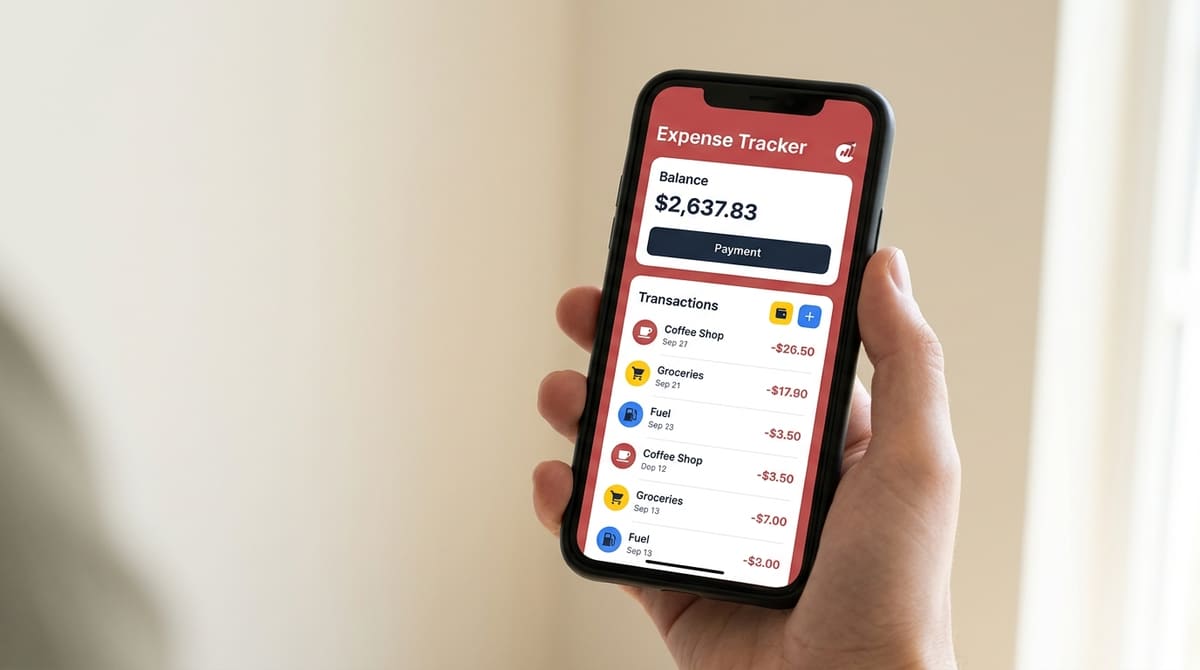
What that replaces in your sheet, specifically:
Flexible splitting. The weighted family split from earlier is a percentage split you set once. The person who skipped the boat tour gets excluded from that one expense with a tap, no helper column required.
Smart Settlements. Instead of twenty transfers, Zedger suggests the minimum set of payments that clears every balance. This is the calculation almost nobody runs manually, and it's the difference between a clean ending and a week of partial transfers.
Offline-first logging. Add an expense with no signal, on the plane, in a tunnel, in a village with no data, and it syncs when you're back online. This is the single biggest practical gap between an app and a cloud spreadsheet on a trip.
Everyone logs, not just the organizer. Each member adds what they paid directly. The organizer stops being the data entry clerk and the collections department at the same time.
Separate Books for separate lives. Your trip costs don't bleed into your household ledger. A Family Book, a Recurring Book for roommate bills, and a Trip Book stay separate, which matters when you get home and the trip is over but the rent isn't.
You can see the full feature set on the travel expense split app page. It's the same job as a group travel expense calculator, with the manual parts removed.
Honest Answers to the Questions We Get Asked
"Do I have to link my bank account?" No. Zedger never asks for bank credentials, UPI access, or OTPs, and it can't access or process your bank transactions. You log amounts, the app does the math, and settlement happens however your group already pays each other.
"Is the free tier actually usable?" For most trips, yes.
"What happens to my data?" There's a local storage option, so sensitive data can stay on your device rather than only on servers. We don't sell your financial data.
"I already use something else." Then keep using it, until it annoys you. The reasons people move usually come down to wanting separate Books instead of one undifferentiated list, or wanting offline entry that actually works abroad. If none of those are pain points for you, your current setup is fine.
"Does this only work for trips?" No. The same Book structure runs household tracking and roommate bills. A fundraising goal tracker Book handled a flood relief drive, with every contribution logged as it came in.
Start Your Next Trip With the Math Already Done
Build the spreadsheet if you like spreadsheets. The layout above is yours, free, and it will do the job for a straightforward trip with two or three people and one currency.
But remember what the sheet can't do. It can't stop one friend from fronting the lodging deposit and then spending three weeks asking for it back. It can't log an expense when you're somewhere without signal, and it can't work out the smallest set of transfers that settles six people's balances. Those are the parts that turn a good trip into an awkward one, and they're exactly the parts worth handing off.
Create a Trip Book, add your group before anyone books anything, and divide the big components up front so nobody becomes the bank.
- Get It on Google Play
- Download on the App Store
- Running trips for a club, society, or organization? Contact Sales about custom plans.
Tags: